


Blog
Himalayan Salt Lamps: What They Are & How They Work (Complete Beginner Guide)

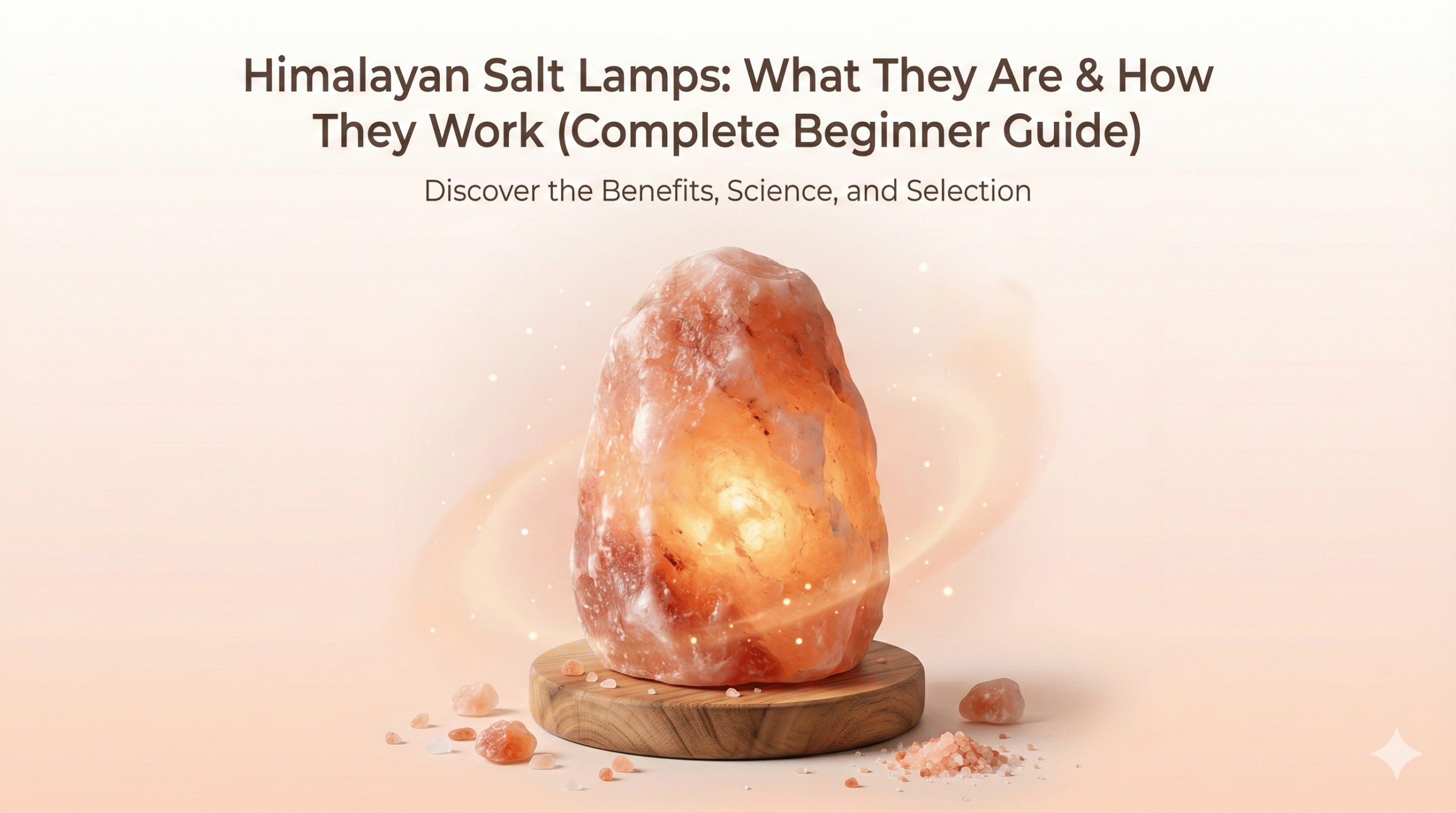
Himalayan salt lamps are blocks of pink rock salt, usually from the Khewra region, shaped into lamps with a small bulb inside. Many people use them for calm lighting, home décor, and their well-known claims about air quality, mood, and sleep. In this guide, you’ll get a clear look at what these lamps are made of, how they function, and what current sources say about their benefits. You’ll also see simple tips on placement, daily use, sizing, and how to pick a real lamp instead of a fake one. This section sets the base for the full guide ahead.
What is a Himalayan salt lamp?
A Himalayan salt lamp is a block of pink salt shaped to hold a bulb inside. When the bulb warms the salt, it creates a soft amber glow. These lamps are often used for calm lighting, simple décor, and general home comfort. Many people also search for details about health claims, real vs fake lamps, and how these lamps are sized for different rooms.
Where the salt comes from (Khewra mines, Pakistan)
Most genuine Himalayan salt lamps come from the Khewra salt mines in Pakistan, known for their pink rock salt. This origin is a key sign of an authentic lamp.
Types & sizes (small, medium, large, basket, clustered)
Himalayan salt lamps appear in several forms: single-piece small lamps for desks, medium and large lamps for bedrooms or living rooms, and basket-style or clustered lamps filled with loose salt chunks
How Himalayan salt lamps are made & how they work
A Himalayan salt lamp is built from a carved block of pink salt mounted on a wooden base with a small bulb inside. When the bulb warms the salt, it releases a gentle glow and may attract slight moisture from the air. Supporters believe this warm surface can help release negative ions, though this idea is still debated. Lab tests show that salt lamps produce far fewer ions than machines designed for ionizing air, so expectations should stay practical.
Simple Summary Table
| Topic | What it Means |
| Heating | Bulb warms the salt block |
| Moisture | Light moisture may settle on the surface |
| Ion Output | Very low compared to ionizer devices |
Common benefits people claim
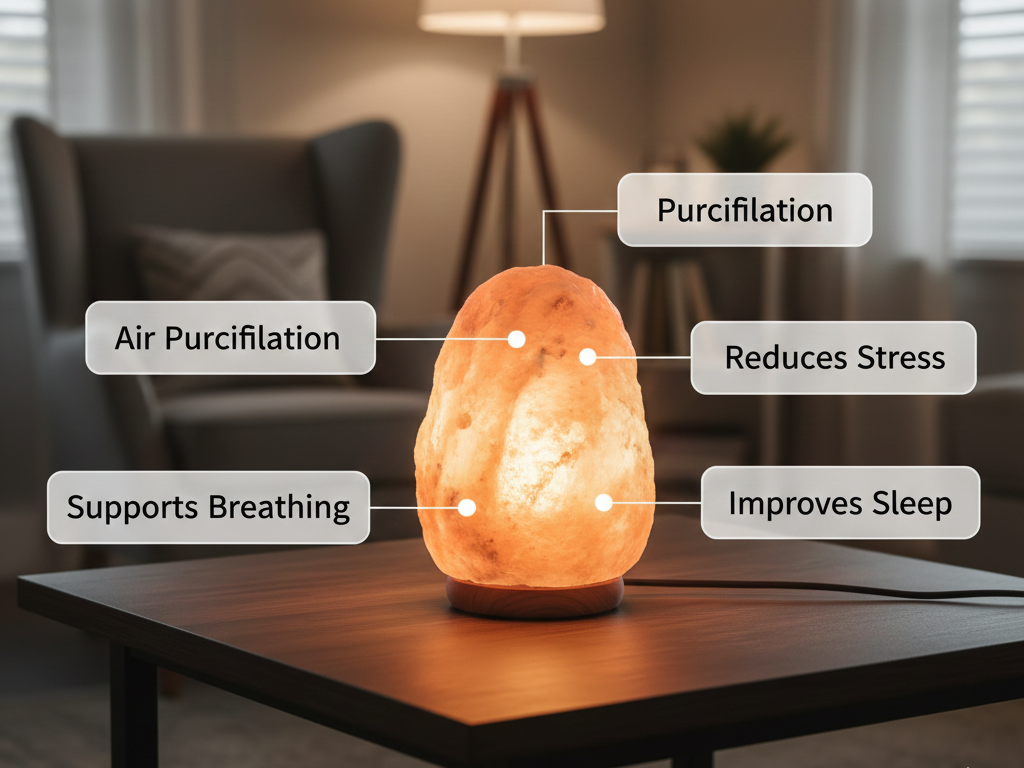
People often search for Himalayan salt lamp benefits because these lamps are linked with air quality, breathing comfort, sleep, and general room atmosphere. Below is a simple look at the most common claims and what current sources say about them.
Air purification claims
Some users believe these lamps clean the air through moisture attraction and negative ions. Public health sources explain that the ion output is very low, so any air-cleaning effect should be seen as minor.
Respiratory relief (asthma/allergy)
Many hope a salt lamp can support breathing comfort. Current summaries note that halotherapy involves direct salt exposure, while a passive lamp does not offer the same level. It may add calm lighting, but it should not replace medical care.
Sleep & mood (warm light effect)
The warm amber glow can support a relaxed atmosphere before bedtime. This effect comes from the soft light rather than the salt itself. Users often keep these lamps in bedrooms for a calmer evening routine.
Evidence snapshot: what the science says
Many people want to know whether Himalayan salt lamps really deliver the benefits they claim. Scientific sources indicate that while these lamps create a soothing environment, the actual health effects are limited. Here’s a clear snapshot of claims versus evidence.
| Claim | Evidence level | Source(s) |
| Air purification | Low | Healthline, WebMD |
| Respiratory relief | Low | LamClinic, WebMD |
| Mood/sleep improvement | Moderate (light effect only) | Healthline |
Negative ions: required levels vs lamp output
Salt lamps are often said to release negative ions, which can improve air quality and mood. In reality, therapeutic negative-ion effects require millions of ions per cubic centimeter, while a typical lamp produces only a tiny fraction.
Controlled studies: what exists & what’s missing
Few formal studies exist on Himalayan salt lamps specifically. Most evidence is anecdotal, with limited controlled trials. Current research mainly supports general light therapy effects rather than salt-specific health improvements.
How to use a salt lamp effectively (practical tips)
To get the most from a Himalayan salt lamp, place it in a dry area where it can be seen and enjoyed, such as a bedroom, living room, or office desk. Use the recommended wattage for your lamp size, typically 15–25 watts for small to medium lamps. Keep it on for several hours daily to maintain warmth and glow, and gently clean the surface with a dry cloth. Avoid excessive humidity to prevent sweating.
Quick sizing chart
| Lamp size | Recommended room size |
| Small (2–5 lbs) | 50–100 sq ft |
| Medium (6–11 lbs) | 100–200 sq ft |
| Large (12–20 lbs) | 200–400 sq ft |
| Extra Large (20+ lbs / clustered) | 400+ sq ft |
Buying guide: how to spot a real Himalayan salt lamp
When choosing a Himalayan salt lamp, authenticity is key. Look for lamps sourced from the Khewra mines in Pakistan, which ensures genuine pink salt. Check the return policy to confirm the seller stands behind the product. Examine the light: a real lamp emits a warm amber glow, not harsh or overly bright light. The base should be sturdy, typically wood, to support the salt block safely. Avoid lamps that feel lightweight or poorly made, as these may be fake. Following this checklist helps you select a real, safe, and long-lasting lamp.
Price ranges and red flags (too cheap, non-returnable)
Genuine Himalayan salt lamps vary in price depending on size and type. Small lamps typically cost $15–$25, medium $25–$50, and large or basket-style lamps $50+. Be cautious of lamps priced far below these ranges, or sellers that do not offer returns or clear product information. Unrealistically low prices often indicate fake lamps, low-quality salt, or unsafe electrical components. Always buy from reputable sources to ensure authenticity and safety.
Safety, recalls & maintenance
Himalayan salt lamps are generally safe, but it’s important to follow basic electrical safety tips. Always use the correct bulb wattage, check that wiring and plugs are intact, and avoid placing lamps near water or damp areas. Some lamps have been recalled due to faulty wiring or fire hazards, so buying from reputable sellers is essential. Regularly dust and wipe your lamp with a dry cloth to prevent excess moisture and “sweating,” which can damage surfaces or furniture. Following these simple steps keeps your lamp safe and long-lasting.
Is it safe around pets/children?
Salt lamps are not toxic, but pets may be tempted to lick the salt, which can lead to salt ingestion issues. Keep lamps on stable surfaces out of reach of pets and young children. Supervision is recommended, and unplugging the lamp when unattended adds extra safety. This ensures everyone enjoys the warm glow without risk.
Alternatives to salt lamps (evidence-based)
While Himalayan salt lamps create a calming glow, evidence shows their direct health benefits are limited. For those seeking real air purification or respiratory support, halotherapy—using salt caves or halogenerators—provides higher exposure to salt particles and has some clinical study support. True air ionizers and HEPA filters are also effective alternatives, helping reduce airborne allergens, dust, and pollutants. Choose these devices when air quality or allergy relief is your main goal, while Himalayan salt lamps remain a decorative and mood-enhancing option. Combining both can give ambiance plus practical air support.
Conclusion / Key Takeaways
Himalayan salt lamps add a warm, calming glow to your home and can support relaxation and mood, but their health benefits are limited. Use them as decorative lighting, place them in dry areas, follow proper sizing for your room, and maintain the lamp by keeping it dry and clean. For any breathing, allergy, or sleep concerns, rely on evidence-based treatments and consult a doctor rather than expecting lamps to replace medical care. These simple steps ensure you enjoy your salt lamp safely and effectively.
FAQ — Himalayan Salt Lamps (structured for schema)
Q1: Do Himalayan salt lamps purify the air?
A: They produce very few negative ions, so any air purification is minimal. Lamps mainly add soft ambient light rather than cleaning air.
Q2: Can salt lamps help with allergies or asthma?
A: Passive lamps do not provide the same effects as halotherapy. They may create a calming environment but are not a medical treatment.
Q3: How can I tell if a salt lamp is real?
A: Look for Khewra salt origin, warm amber glow, sturdy wooden base, and a reputable seller with a return policy.
Q4: Are salt lamps safe around children and pets?
A: Keep lamps out of reach. Pets licking salt may ingest too much; supervise children to prevent accidents.
Q5: How long should I leave my salt lamp on?
A: Several hours a day is enough to maintain glow and mild warmth; turn off when unattended for safety.
Q6: How do I clean and maintain a salt lamp?
A: Wipe gently with a dry cloth. Avoid water or humid areas to prevent sweating and surface damage.
