


Blog
How to Spot a Fake Himalayan Salt Lamp: 5 Ways I Check Mine

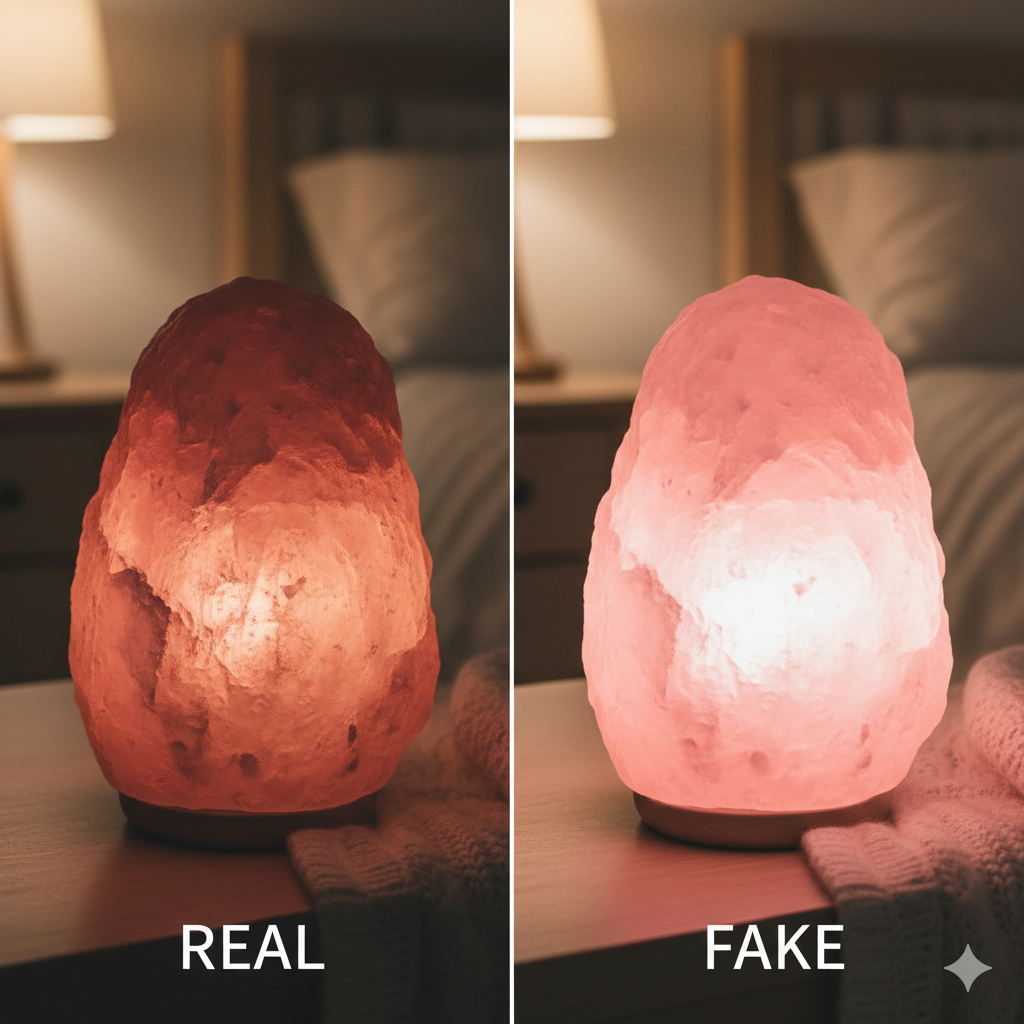
You want the real deal. Nobody wants to pay good money for fake junk. The salt lamp market is full of copies. You might be staring at a piece of molded glass or plastic right now. I’ve bought duds before. It happens to everyone. I learned five simple tricks. Use these to check if your pink rock is the real thing.
What’s the Easiest Way to Spot a Fake Lamp?
The easiest way to spot a fake salt lamp is by checking its ability to “weep” or sweat when the light is turned off in a humid room. Real Himalayan salt pulls moisture from the air, but fakes, which are often glass or plastic, will stay completely dry no matter what. A real lamp needs care because it’s real salt.
Why Fakes Exist
Salt lamps are popular. When something gets popular, people copy it. They use cheaper materials. This way, they make more money.
They might use cheap glass. Sometimes they use a resin. These don’t have the minerals. They don’t have the hygroscopy. They only have the look.
Test 1: The “Sweat” Test (The Moisture Trick)
This is the most reliable check. It goes back to science. Real salt pulls water.
The Hygroscopy Signal
If you turn off your real lamp for a few days, it pulls moisture from the air. Especially in summer. The lamp will look like it’s crying. It will feel damp. This is normal.
A fake lamp? It won’t pull any water. It will stay dry and smooth always. If it doesn’t weep, it’s probably cheap glass.
Data Suggestion: TABLE. A simple comparison table highlighting the result of the moisture test.
| Feature | Real Himalayan Salt Lamp | Fake Lamp (Glass/Resin) |
| Humidity Test | Becomes slightly damp or “sweats” | Stays completely dry and smooth |
| Appearance | Often uneven, visible cracks | Looks too perfect, too clear |
Test 2: The Light Test (Color and Clarity)
The pink color comes from those tiny minerals. This affects the light.
Is the Light Too Bright?
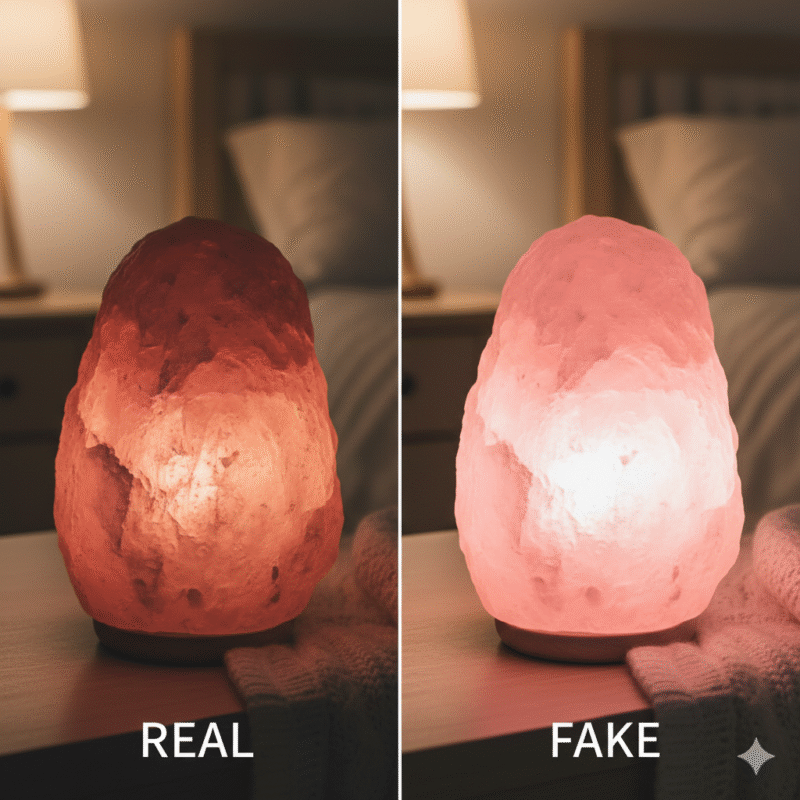
A real salt lamp is muted. The light should be soft. It should feel like a deep, sunset orange. You can look right at it without squinting.
If the lamp is crystal clear and super bright, it might be fake. A fake lamp lets too much light through. The real rock blocks some of the light.
Not Too Uniform
Real rocks are natural. They have flaws. The color should change. One part might be darker pink. Another part might be almost white. If your lamp is the same perfect color all over, be careful. Perfect usually means man-made.
Test 3: The Crumb Test (Durability)
Don’t smash your lamp! But you can feel it.
Is It Too Hard?
Salt is fragile. If you bump a real salt lamp, a tiny crumb might break off. It dents easily. If you scratch it hard, it might leave a powder mark.
Fake lamps are usually tough. They feel like heavy plastic or glass. They don’t dent easily. They are too hard for a simple rock salt crystal. Real salt is brittle.
Test 4: The Hot Test (The Bulb Check)
This relates to safety and material.
Does It Stay Cool?
A real salt lamp gets warm from the bulb. It shouldn’t get hot enough to burn you. The heat is needed for the hygroscopy.
If your lamp stays totally cool even after hours of use, it might be made of material that doesn’t conduct heat well. This is another red flag. It must be slightly warm to the touch.
Final Thoughts: Buy From a Trusted Source
It all comes down to trust. Buying from a good seller is the easiest way to avoid fakes. A reputable seller will tell you where the salt comes from. They will be honest about the material.
Use these simple tests when your lamp arrives. Check for the moisture. Check the softness of the light. Don’t let a bad seller ruin your cozy home mood. Get the real thing, and enjoy that warm glow.
