


Blog
How Himalayan Salt Lamps Are Made – From Mine to Market

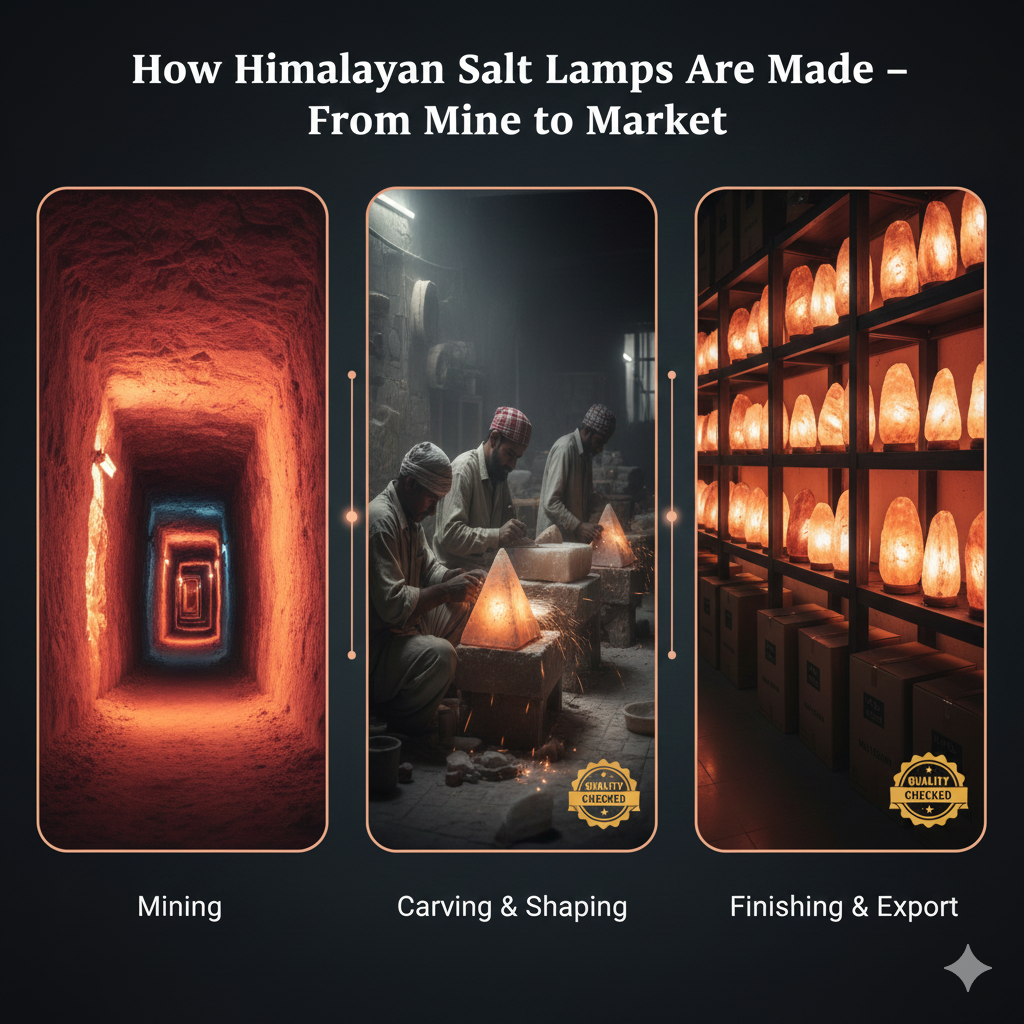
Himalayan salt lamps have captured global attention for their unique pink glow and reputed health and ambiance benefits. At the heart of this production is the Khewra Salt Mine in Pakistan, one of the world’s oldest and largest salt mines, known for its high-quality pink salt. From hand-mined blocks to carefully carved lamps, Pakistan’s salt lamp industry combines traditional expertise with modern manufacturing techniques. Increasing international demand has made these lamps not just a décor item but a sought-after export product. In this article, we’ll explore how Himalayan salt lamps are made, the mining process, and why Khewra remains central to their authenticity.
Origin & Mineral Quality
Himalayan salt lamps originate from the Khewra Salt Mine in Pakistan, a region renowned for its rich pink salt deposits. The unique mineral composition, including trace elements like magnesium, potassium, and calcium, gives these lamps their distinctive color and crystalline texture. Authenticity is key—genuine Khewra salt lamps are valued for their natural mineral quality, uniform glow, and solid structure. Counterfeit or imported salts often lack the same mineral profile and may fade or crumble over time. Understanding the provenance and mineral composition helps buyers ensure they are investing in a true Himalayan salt lamp with both aesthetic and potential wellness benefits.
Mining Process
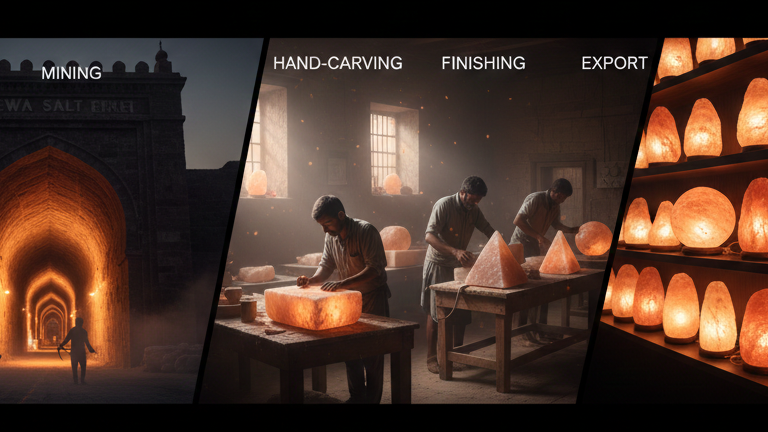
Himalayan salt lamps begin their journey deep within the Khewra Salt Mine, where skilled miners follow a careful mining process. Initially, surveying identifies high-quality salt deposits, followed by precise drilling and controlled blasting to extract large salt blocks. The room-and-pillar method ensures structural safety while minimizing waste. Depending on the scale, miners use hand tools or mechanical equipment to remove salt blocks, preserving the natural crystalline structure. Each extracted block is then inspected for clarity, color, and purity. Understanding this mining process highlights the craftsmanship behind authentic Himalayan salt lamps and explains why their mineral-rich composition and natural glow are highly prized worldwide.
Extraction & Grading
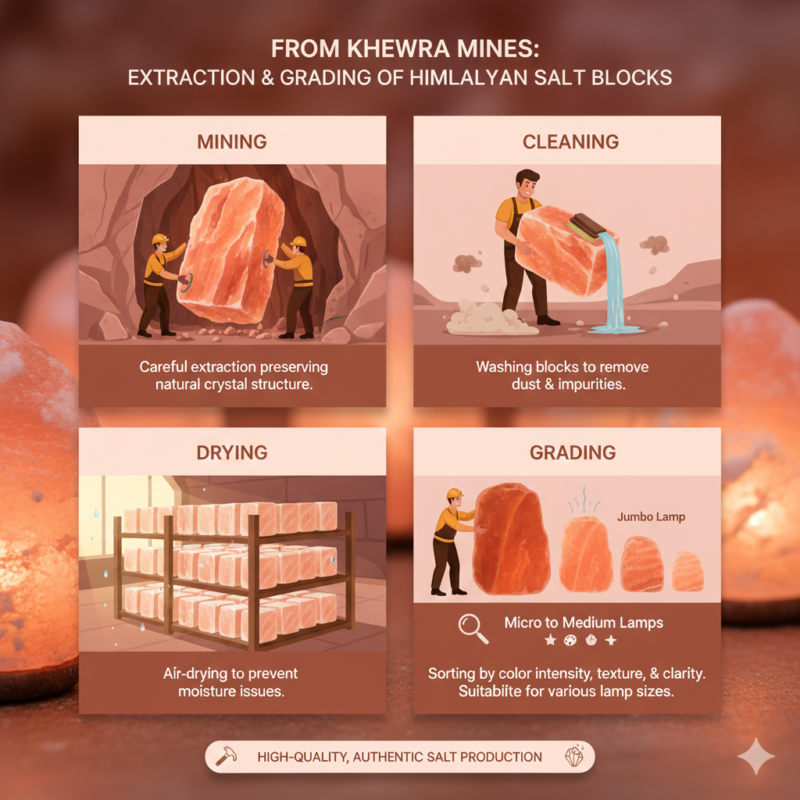
Once salt blocks are carefully mined from the Khewra Mine, the extraction and grading process begins. Workers remove each block while preserving the natural crystal structure, ensuring the salt retains its mineral integrity and aesthetic appeal. The blocks are then washed to remove dust and impurities, followed by thorough drying to prevent moisture-related issues. After drying, salt blocks are meticulously sorted and graded based on color intensity, texture, and clarity. This grading determines their suitability for various Himalayan salt lamp types—from micro to jumbo sizes—and guarantees that only high-quality, authentic salt reaches manufacturers and exporters for crafting premium lamps.
Lamp Types & Designs
Himalayan salt lamps are crafted in a variety of designs to suit different spaces and décor styles. Popular shapes include cube, pyramid, and basket forms, each offering a unique aesthetic and light diffusion. Mini lamps are ideal for desks or bedside tables, while jumbo lamps make a striking centerpiece in living rooms or offices. The natural pink and white hues complement modern and traditional interiors, creating a warm, calming ambiance. Careful placement—near workspaces, bedrooms, or meditation corners—enhances mood and relaxation. Choosing the right lamp size and design ensures both visual appeal and functional benefits, making your space soothing and inviting.
Export Preparation
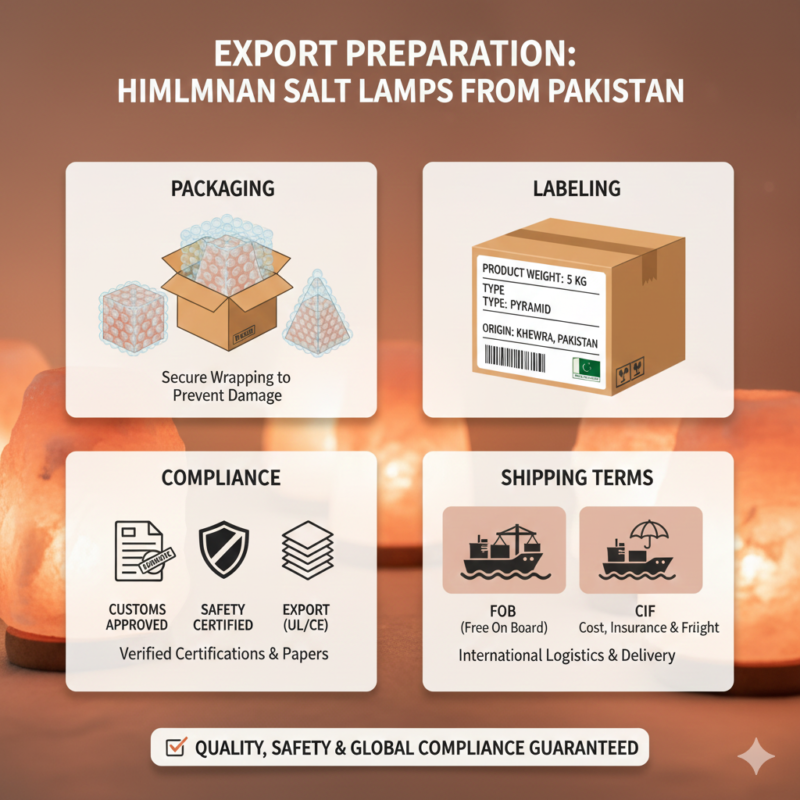
Preparing Himalayan salt lamps for export involves careful packaging, labeling, and compliance checks to ensure products reach international buyers safely. Each lamp, whether cube, pyramid, or basket, is securely wrapped to prevent chipping or moisture damage during transit. Proper labeling includes product weight, type, and origin from Khewra mines, which helps verify authenticity. Exporters must follow documentation requirements, including customs declarations and safety certifications. Understanding shipping terms like FOB (Free on Board) and CIF (Cost, Insurance, and Freight) is crucial for cost calculation and logistics planning. These steps ensure that Pakistani salt lamps maintain quality, comply with regulations, and arrive in pristine condition.
Health & Ambiance Benefits
Himalayan salt lamps are cherished not just for their warm glow but also for their calming effect on mood and stress. Many users report that the soft, ambient light helps create a relaxing atmosphere, supporting better sleep and a sense of emotional balance. While claims about ionization and air purification are often exaggerated, the psychological benefits are real—helping reduce tension during meditation or quiet moments. Placing lamps in bedrooms, living rooms, or workspaces can subtly enhance well-being. Understanding realistic expectations ensures users enjoy the soothing ambiance without expecting miracle health effects from the salt lamps alone.
Sustainability & Ethical Practices
Responsible Himalayan salt lamp production in Pakistan emphasizes eco-friendly mining and ethical labor practices. Mines in Khewra are adopting measures to reduce environmental impact, including careful extraction techniques that prevent over-harvesting and preserve natural crystal formations. Worker safety is a top priority, with proper equipment, training, and monitoring to minimize accidents. Many manufacturers aim for zero-waste processes, repurposing leftover salt fragments for smaller lamps or decorative items. By choosing suppliers committed to sustainability and ethical standards, buyers not only receive authentic, high-quality lamps but also support practices that protect the environment and local communities for future generations.
Buyer Tips
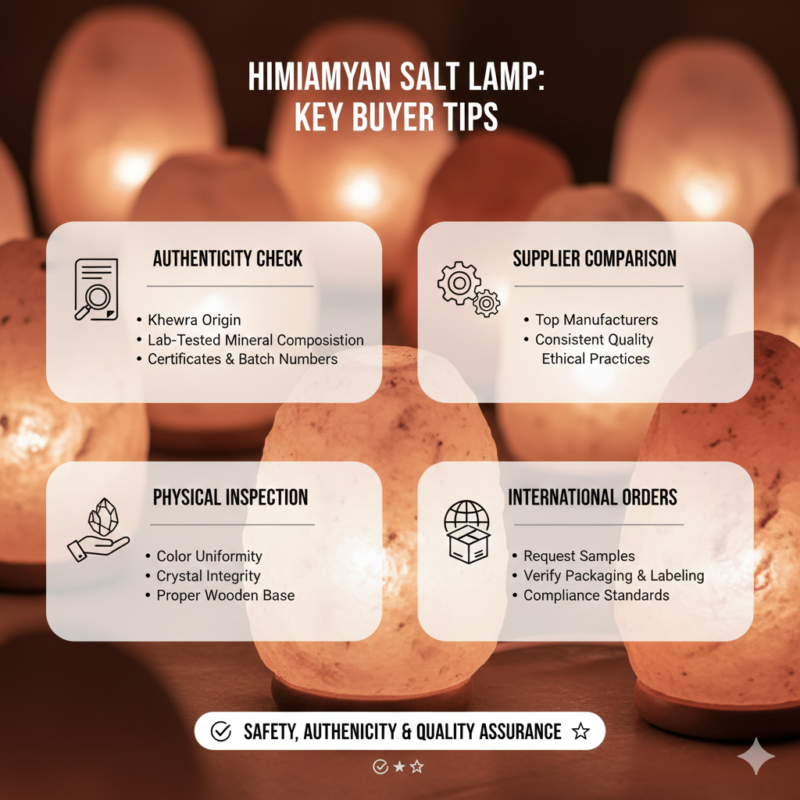
When purchasing Himalayan salt lamps, especially for export or high-value use, verifying authenticity is essential. Start by checking Khewra provenance through supplier documentation and lab-tested mineral composition reports. Traceability matters—reputable manufacturers provide batch numbers, certificates, or lab results confirming genuine pink salt. Compare multiple suppliers, focusing on top manufacturers with consistent quality and ethical practices. Inspect lamps physically for uniform color, crystal integrity, and proper wooden bases. For international buyers, request samples before bulk orders and clarify packaging, labeling, and compliance standards. Following these steps ensures buyers receive authentic, high-quality Himalayan salt lamps while avoiding counterfeit or low-grade products.
Conclusion
Himalayan salt lamps undergo a meticulous journey from the Khewra mines to homes worldwide, reflecting Pakistan’s expertise and mineral-rich resources. From careful mining and grading to diverse lamp designs like cubes, pyramids, and baskets, every step emphasizes quality and authenticity. Export preparation, including packaging, labeling, and compliance, ensures lamps meet international standards. Buyers benefit from verifying provenance, lab tests, and supplier traceability to avoid counterfeits. Beyond aesthetics, these lamps offer subtle ambiance and wellness benefits. Understanding the full production, quality assurance, and export process empowers consumers and traders to make informed, confident decisions when purchasing Himalayan salt lamps from Pakistan.
FAQ
Q1: What mining techniques are used in Khewra for salt lamp production?
A1: Khewra mines use a combination of room-and-pillar and hand-mining techniques. Workers carefully drill and extract salt blocks to preserve crystal integrity, sometimes using mechanical tools for larger extractions.
Q2: How do cube, pyramid, basket, mini, and jumbo lamps differ in design and placement?
A2: Cube lamps suit desks or small tables, pyramid lamps add elegance to living spaces, baskets work well in ambient décor, mini lamps for bedside, and jumbo lamps for large rooms or halls.
Q3: How can I verify the authenticity and Khewra origin of a lamp?
A3: Check for natural pink-orange hues, solid crystal texture, origin certificate from the supplier, and avoid overly uniform or synthetic-looking lamps.
Q4: What are the export requirements and compliance documents for international buyers?
A4: Export-ready lamps need proper packaging, labeling, customs clearance documents, and sometimes ISO or safety compliance certificates for electrical components.
Q5: How are eco-friendly mining and sustainable practices implemented?
A5: Responsible suppliers minimize waste, follow safe mining practices, recycle debris, and ensure worker safety, preserving the mine’s long-term viability.
Q6: What safety and maintenance tips ensure longevity of Himalayan salt lamps?
A6: Use recommended bulb wattage, avoid excessive moisture, wipe with a dry cloth, protect wooden bases, and inspect wiring regularly to prevent hazards.

One thought on “ How Himalayan Salt Lamps Are Made – From Mine to Market”