


Blog
Do Salt Lamps Really Improve Sleep & Reduce Allergies?

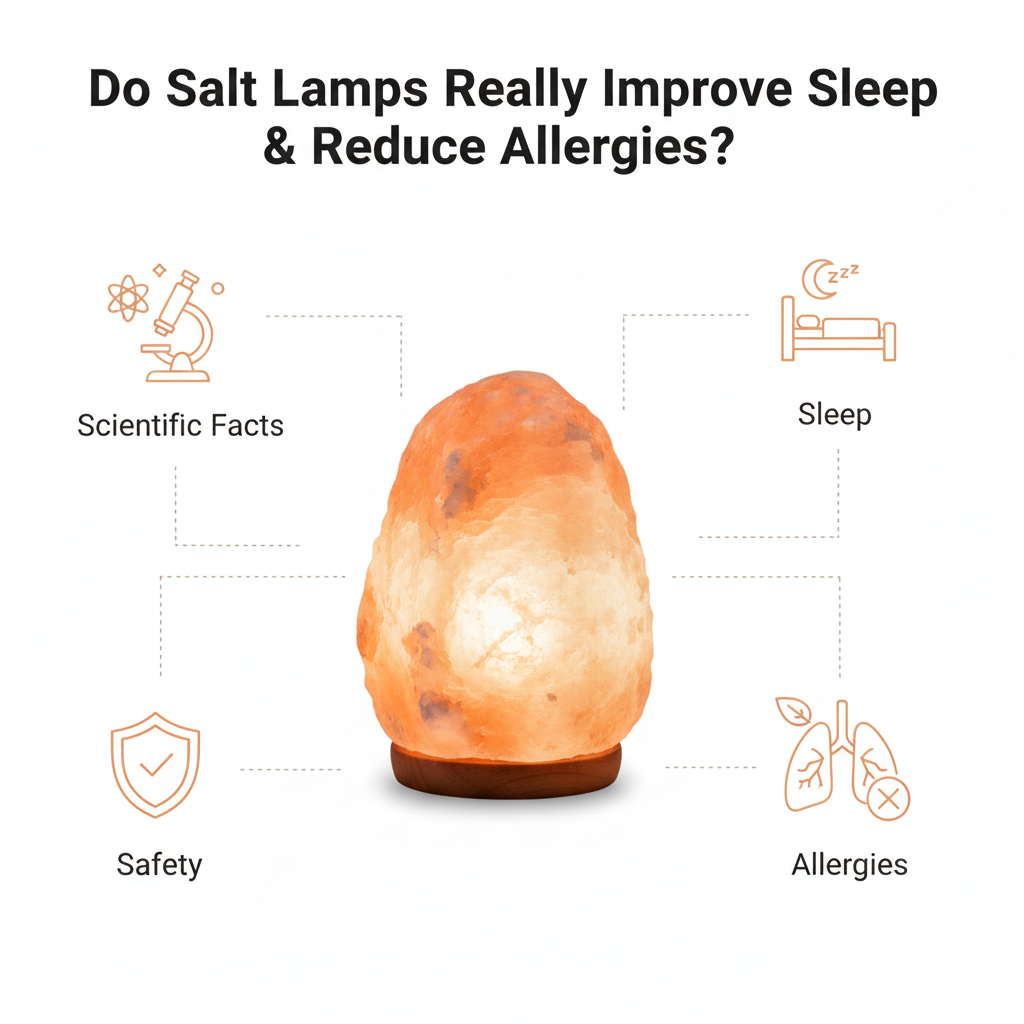
Salt lamps, often made from Himalayan pink or white salt crystals, have become popular for their warm glow and decorative charm. Many users claim they improve sleep, reduce allergies, and enhance mood, while some believe they help purify indoor air by releasing negative ions. Despite growing popularity, scientific evidence remains limited, with studies showing mixed results. In this guide, we explore both the anecdotal benefits and the research behind these claims, helping you understand whether salt lamps truly impact sleep quality and respiratory health or if their effects are mainly psychological and decorative.
How Salt Lamps Work
Salt lamps are carved from natural Himalayan pink or white salt crystals, each with a unique hue and crystalline structure. When a small bulb warms the lamp, it slightly heats the salt, which some claim releases negative ions into the surrounding air. These ions are thought to counteract positively charged particles from electronic devices, dust, and allergens, potentially improving indoor air quality. While the glowing effect adds a calming ambiance, scientific studies show that the actual ion output is minimal. Still, many people enjoy using salt lamps as part of a soothing bedtime or relaxation routine.
Health Benefits
Salt lamps are often praised for creating a calming environment that may support better sleep. The soft, warm glow can help regulate your circadian rhythm, making it easier to relax before bedtime. Some users report relief from mild allergy and respiratory symptoms, as the lamp’s subtle warming effect can slightly reduce airborne dust, though scientific evidence for significant air purification is limited. Beyond sleep and allergies, many find that Himalayan salt lamps improve mood and reduce stress, providing a gentle psychological comfort. While benefits vary, their aesthetic and ambient lighting make them a popular wellness accessory.
Myths & Misconceptions
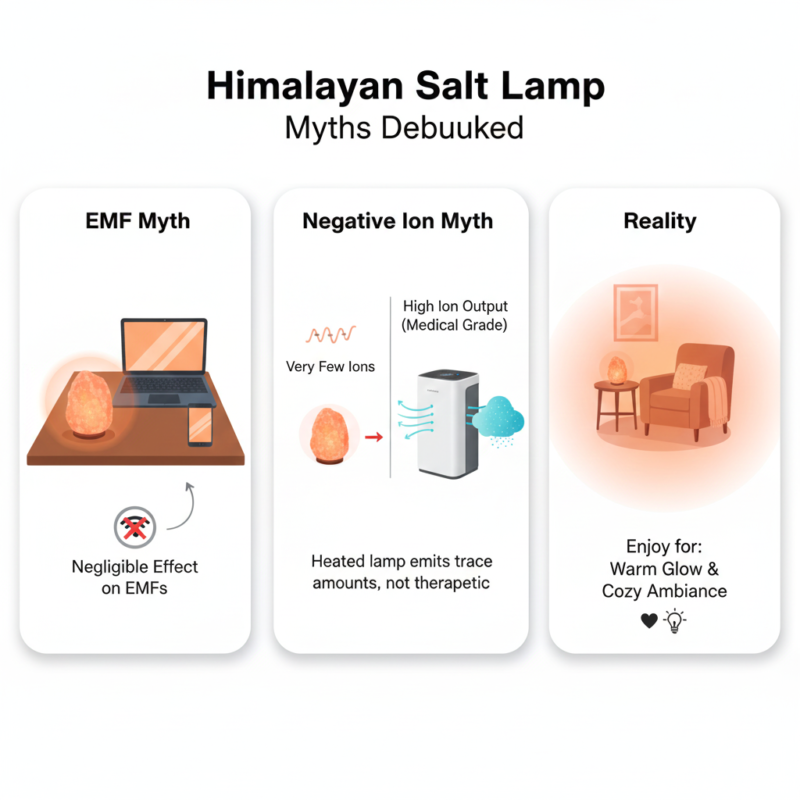
Many claims about Himalayan salt lamps are widely circulated but not fully supported by science. One common myth is that salt lamps can neutralize EMF (electromagnetic fields) from electronics; research shows their impact on EMF is negligible. Another popular belief is that they generate therapeutic negative ions strong enough to improve health. While salt lamps emit a tiny number of ions when heated, the effect is minimal compared to medical-grade air purifiers. Understanding these misconceptions helps users set realistic expectations—enjoying salt lamps for their warm glow and ambiance rather than relying on them for measurable health benefits.
Scientific Evidence & Limitations
Scientific studies on Himalayan salt lamps show limited measurable effects on sleep, allergies, or air quality. While some small trials suggest a calming glow may support relaxation or mild improvements in mood, there’s no strong evidence that these lamps significantly reduce allergens or purify air. Most reported benefits are anecdotal, relying on personal experiences rather than controlled experiments. Users may notice psychological comfort or a cozy atmosphere, but physiological effects are minimal. Understanding the distinction between anecdotal claims and scientific data helps set realistic expectations, allowing salt lamps to be enjoyed primarily for ambiance and decorative warmth rather than proven health benefits.
Lamp Types & Placement
Himalayan salt lamps come in various types, each suited for different spaces and purposes. Pink salt lamps, naturally sourced from Khewra mines, offer the classic warm glow, while white salt lamps provide a softer, neutral light for modern décor. Shapes like pyramid, basket, or USB-powered mini lamps let you choose based on style and convenience. Placement is key: a bedside lamp can support sleep and relaxation, a desk lamp may improve focus and mood, and larger lamps in living rooms create ambient lighting while potentially contributing to air freshness. Proper positioning ensures both safety and aesthetic appeal.
Safety & Maintenance
Ensuring your Himalayan salt lamp is safe starts with checking the correct bulb wattage—using a higher wattage than recommended can overheat the salt and pose fire risks. Salt naturally attracts moisture, so sweating is normal; place lamps on a protective tray to prevent furniture damage and wipe them gently with a dry cloth. Regularly inspect wiring for corrosion or frayed cords, especially in humid rooms. Keep lamps out of reach of pets and children, as ingesting salt can be toxic. Stay updated on recall alerts to replace any faulty models and maintain a safe, glowing environment.
Buying Guide & Authenticity
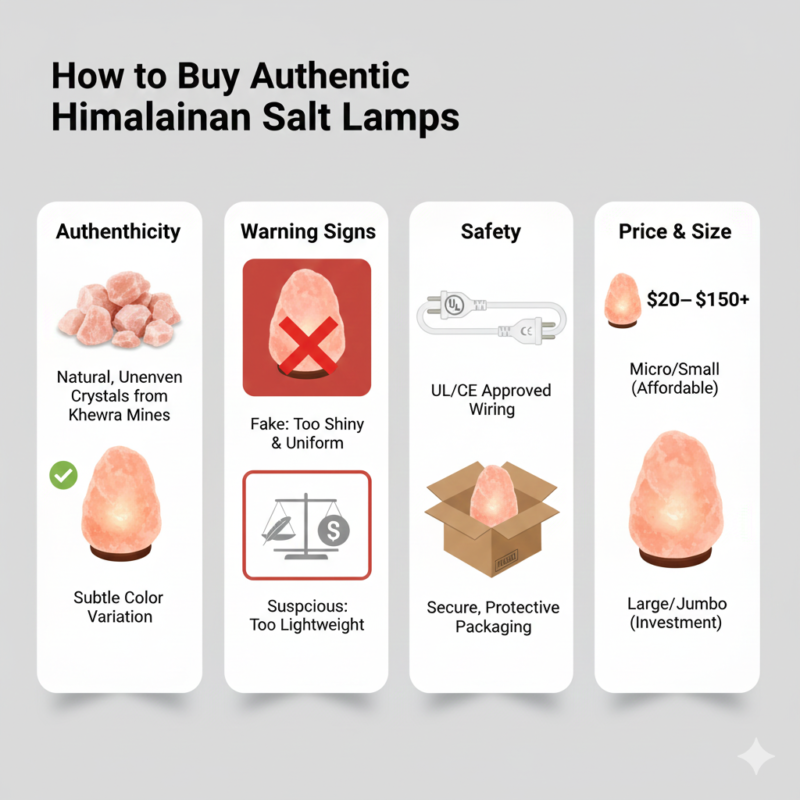
When buying a Himalayan salt lamp, authenticity matters. Look for natural pink crystals from the Khewra mines in Pakistan, as genuine lamps have a slightly uneven surface and subtle color variations. Be cautious of overly shiny or uniformly colored lamps, which may be dyed or synthetic. Check the packaging and seller’s return policy, and ensure the lamp comes with proper UL or CE-approved wiring. Prices vary by size and weight—micro and small lamps are more affordable, while large 15–20 lb lamps cost significantly more. Investing in a verified authentic lamp ensures safety, durability, and the subtle glow that genuine salt provides.
Alternatives & Combination
While Himalayan salt lamps are popular for their calming glow and mild air-purifying claims, they work best as part of a broader strategy for cleaner air and better sleep. HEPA filters effectively remove dust, pollen, and allergens, while ionizers can help reduce airborne particles. Using a salt lamp alongside these devices can create a pleasant ambiance while supporting indoor air quality. Consider placing a small salt lamp on your bedside table or desk and pairing it with a HEPA purifier for maximum effect. This combination balances aesthetics, mood support, and practical air filtration in your living or work space.
Conclusion:
Himalayan salt lamps offer a warm, calming glow and mild air ambiance support. While scientific evidence for sleep or allergy improvement is limited, they are safe when properly maintained. Use authentic lamps, follow cleaning and bulb guidelines, and combine them with HEPA filters or ionizers for enhanced indoor comfort. With mindful placement and care, salt lamps can enhance your room’s atmosphere while minimizing risks.
FAQ
Q1: Can salt lamps really help improve sleep quality?
A1: Himalayan salt lamps emit a soft, warm glow which may help create a calming environment, supporting your circadian rhythm. While there’s limited scientific evidence, many users find the ambient light relaxing for bedtime.
Q2: Do Himalayan salt lamps reduce allergens or dust?
A2: Salt lamps are often claimed to purify air by releasing negative ions. Scientific evidence is limited, and they should not replace HEPA filters or medical allergy treatments.
Q3: Are pink salt lamps more effective than white salt lamps?
A3: The color difference is mostly aesthetic. Both pink and white salt lamps function similarly; effectiveness depends more on lamp size and placement.
Q4: How do I clean my salt lamp safely?
A4: Use a damp cloth to gently wipe the surface. Avoid submerging the lamp in water to prevent salt dissolution and corrosion.
Q5: Can pets or children be harmed by salt lamps?
A5: Yes. Cats and dogs may lick the salt, causing toxicity. Always place lamps out of reach of children and pets.
Q6: What bulb wattage is safe for small and large lamps?
A6: Follow manufacturer recommendations. Small lamps usually require 15–25W bulbs, while larger lamps can use 25–40W bulbs. Ensure bulbs are properly fitted to avoid overheating.
Q7: How can I tell if a salt lamp is authentic?
A7: Check for a natural, uneven crystal surface, origin labeling (Khewra mines in Pakistan), and purchase from trusted sellers. Avoid overly smooth or overly shiny lamps.
Q8: Are USB salt lamps as effective as traditional plug-in lamps?
A8: USB lamps are smaller and provide ambient lig

One thought on “Do Salt Lamps Really Improve Sleep & Reduce Allergies?”