


Blog
Wholesale Salt Lamps: What Retailers Should Know Before Buying

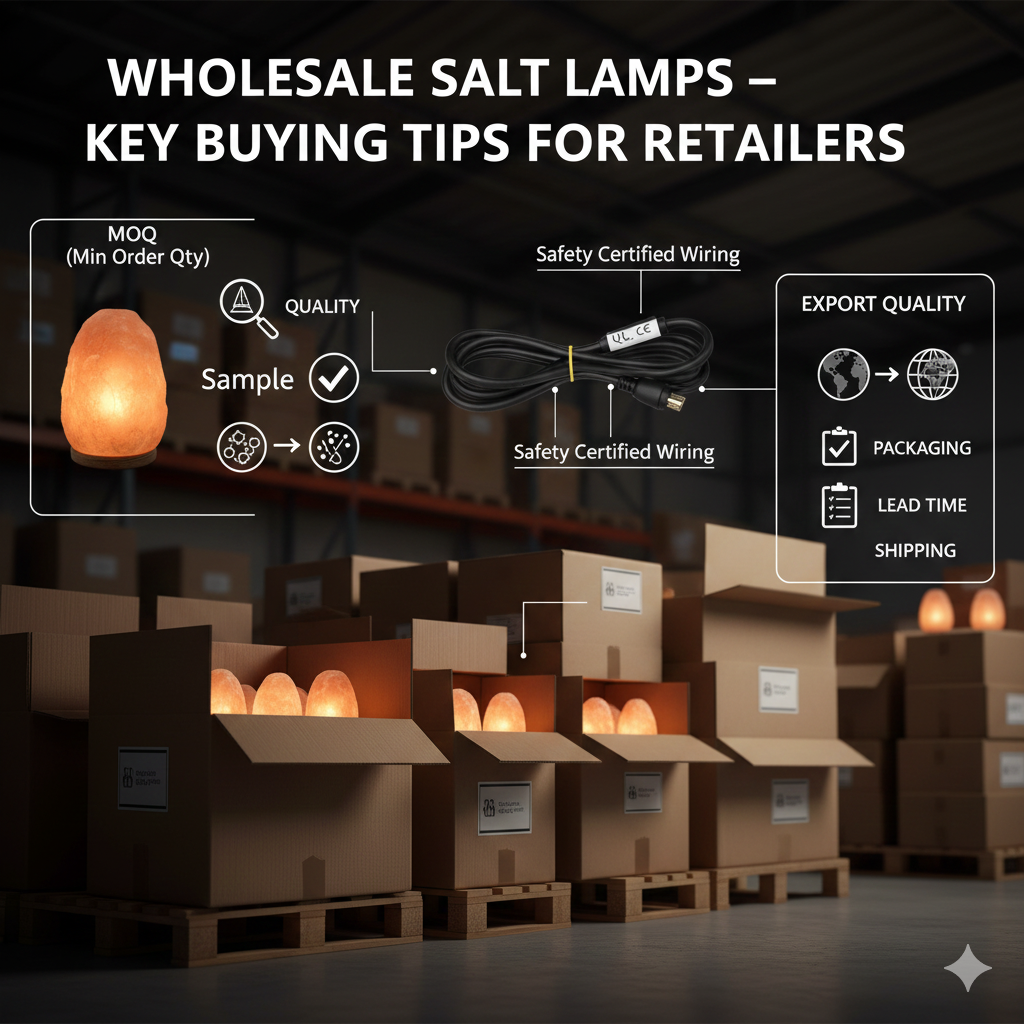
When you’re planning to buy wholesale Himalayan salt lamps, a few points matter the most: clear pricing, MOQ clarity, trusted export processes, and proper supplier vetting. Retailers often compare top manufacturers based on product quality, lab-tested authenticity, and shipment reliability. With the right information, you can choose a supplier who offers stable rates, safe packaging, and genuine Khewra salt lamps that meet international export standards. This guide gives you all the essentials to help you make confident decisions.
Why Wholesale Salt Lamps Sell Well
Wholesale Himalayan salt lamps continue to attract strong demand across multiple retail channels. Their natural look, warm glow, and mineral-rich composition make them popular in home décor stores, wellness boutiques, gift shops, and online marketplaces. Buyers look for genuine Khewra salt lamps because they offer better color, crystal quality, and long-term durability. Retailers also benefit from steady repeat orders since customers often purchase more than one lamp for bedrooms, offices, and spa spaces. With rising interest in natural décor and handmade products, salt lamps remain a reliable category for bulk sellers.
Pricing & MOQ (Weight Bands, FOB vs Retail Price Suggestions)
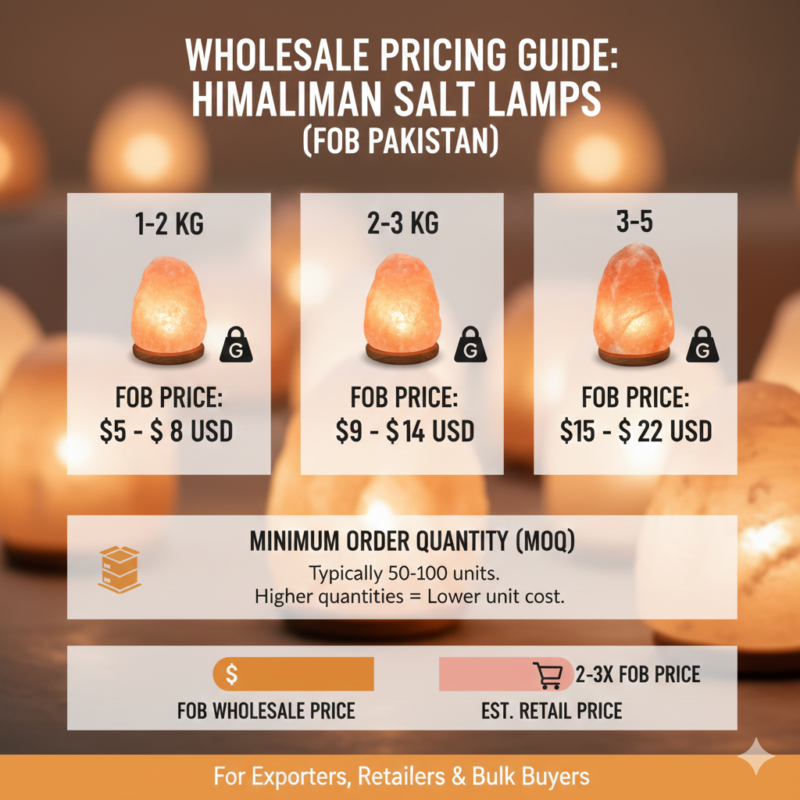
Wholesale salt lamp pricing usually depends on weight bands, crystal grade, and finish quality. Most suppliers follow standard categories like 1–2 kg, 2–3 kg, and 3–5 kg lamps, each with its own FOB rate. Retailers buying in bulk often get better margins when choosing higher MOQs, especially for popular sizes. FOB prices stay lower, while retail prices vary based on packaging, branding, and country of sale. For most markets, retailers comfortably price a 2–3 kg genuine Himalayan salt lamp at two to three times the FOB cost, ensuring stable profits and predictable demand.
How to Vet Suppliers (Khewra Origin, Lab Tests, UL/CE Cord, Photos)
Choosing the right wholesale salt lamp supplier starts with confirming genuine Khewra origin, since real lamps come from this specific Himalayan region. Always ask for lab test reports that show mineral composition and verify that the product meets export standards. A good supplier will also provide UL or CE-certified cords, especially for US and EU shipments. Request clear product photos, packaging samples, and batch details to check consistency. Reliable exporters share traceability information, respond quickly, and openly explain their production process, helping retailers avoid fake or low-grade salt lamps.
Product SKUs & Retail-Ready Packaging (Pre-Boxed Units, Gift Sets)
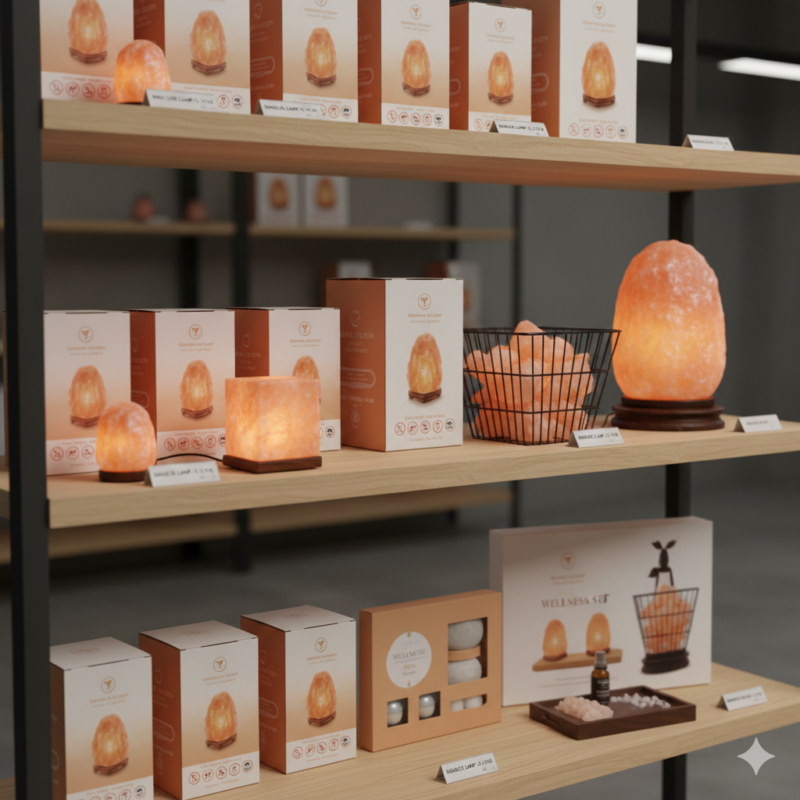
Retailers selling wholesale salt lamps benefit from having clear SKUs for each size, weight band, and design—such as pyramid, cube, basket, USB mini, and jumbo lamps. Well-organized SKUs make inventory smoother and help buyers compare product options. Many suppliers now offer retail-ready packaging, including pre-boxed units with safety inserts, care instructions, and barcodes. Gift sets are also popular because they bundle multiple lamps or accessories in one curated package. When lamps arrive ready for shelf placement or online listing, retailers save time and can launch new products faster with consistent branding.
Product SKUs & Retail-Ready Packaging (Pre-Boxed Units, Gift Sets)
Retailers selling wholesale salt lamps benefit from having clear SKUs for each size, weight band, and design—such as pyramid, cube, basket, USB mini, and jumbo lamps. Well-organized SKUs make inventory smoother and help buyers compare product options. Many suppliers now offer retail-ready packaging, including pre-boxed units with safety inserts, care instructions, and barcodes. Gift sets are also popular because they bundle multiple lamps or accessories in one curated package. When lamps arrive ready for shelf placement or online listing, retailers save time and can launch new products faster with consistent branding.
Export Readiness & Logistics (Sample Shipments, Packing Specs, Shipping Terms)
For retailers and distributors, understanding export readiness is crucial when buying wholesale Himalayan salt lamps. Suppliers often provide sample shipments so buyers can verify quality, packaging, and lamp authenticity before placing bulk orders. Proper packing includes sturdy boxes, protective foam, and moisture-resistant materials to prevent sweating or breakage during transit. Shipping terms such as FOB (Free on Board) or CIF (Cost, Insurance, Freight) should be clearly defined to avoid misunderstandings. Retailers should also confirm customs documentation, labeling, and insurance coverage. Careful planning of export logistics ensures lamps arrive safely and are ready for immediate sale.
Compliance & Certifications to Request (Cord, RoHS Where Needed)
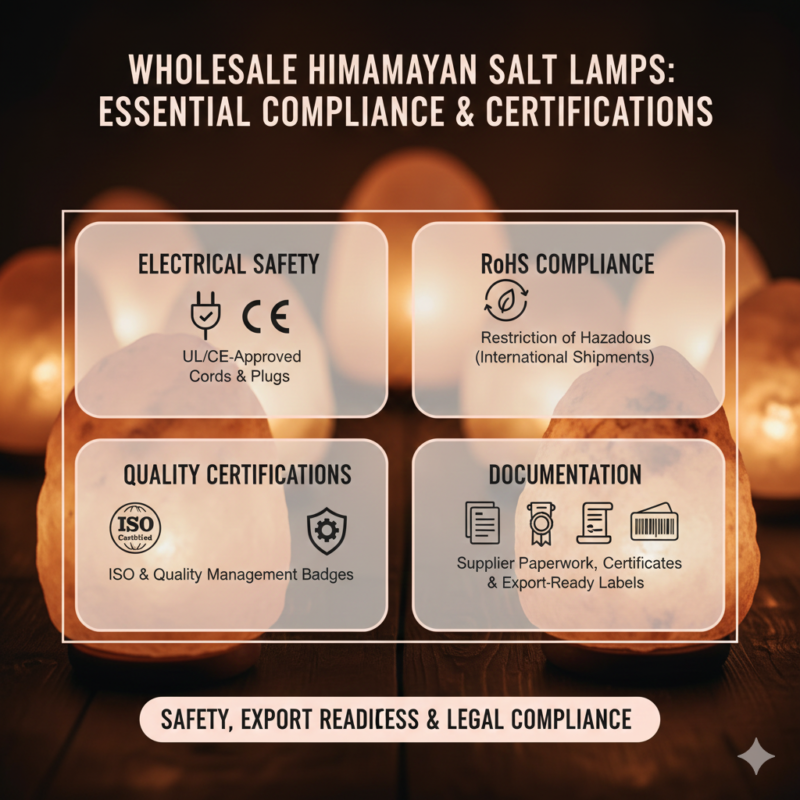
When sourcing wholesale Himalayan salt lamps, verifying supplier compliance and certifications is essential for safety and export standards. Retailers should request documentation for UL or CE-approved cords, ensuring electrical safety for end users. For international shipments, checking RoHS compliance confirms that lamps meet restrictions on hazardous substances. Additional certifications, such as ISO or quality management certificates, can provide further assurance of consistent product quality. Confirming these documents before purchase not only protects customers but also prevents shipment delays at customs. A thorough compliance check ensures your wholesale lamps are safe, market-ready, and legally exportable.
Sustainability & Ethical Sourcing (What to Ask Manufacturers)
Before buying wholesale Himalayan salt lamps, retailers should ask manufacturers about sustainable mining practices and ethical labor standards. Confirm that the Khewra salt extraction avoids environmental degradation, maintains safe working conditions, and reduces waste. Inquire about policies for responsible energy use during production, recycling of scrap salt, and community support initiatives. Suppliers who prioritize ethical sourcing not only protect the environment but also enhance brand credibility with conscious consumers. Asking these questions ensures your wholesale purchase aligns with global sustainability standards, meets growing buyer expectations, and supports a transparent, responsible supply chain for Himalayan salt lamps.
Conclusion
Before placing a bulk order, start by requesting a sample from your chosen Himalayan salt lamp supplier to verify quality, mineral composition, and craftsmanship. Check that all cords meet UL or CE certification standards to ensure safety compliance. Ask for FOB or CIF shipping quotes, including packaging specifications, lead times, and customs requirements, so you can plan logistics efficiently. Confirm MOQs, labeling, and retail-ready packaging to avoid surprises. Following these steps helps retailers source authentic Khewra-origin salt lamps confidently, minimize risks, and build a reliable supply chain for profitable sales.
FAQ
Here are common questions retailers ask when buying wholesale Himalayan salt lamps:
Q1: What is the minimum order quantity (MOQ) for wholesale lamps?
A1: Most suppliers set an MOQ based on weight or units, often starting from 50–100 lamps per SKU.
Q2: Can I request samples before bulk purchase?
A2: Yes, reputable manufacturers provide sample lamps, usually at a small fee or discounted rate.
Q3: What are typical lead times for bulk orders?
A3: Standard production and shipping range from 2–6 weeks, depending on quantity and customization.
Q4: Which certifications should I request?
A4: Ask for UL/CE cords, RoHS compliance, and proof of Khewra origin.

One thought on “ Wholesale Salt Lamps: What Retailers Should Know Before Buying”