Blog

  • Different Sizes of Himalayan Salt Lamps & Which One You Should Buy

    Different Sizes of Himalayan Salt Lamps & Which One You Should Buy

    Himalayan salt lamps come in many sizes, and choosing the right one depends on your room, purpose, and the kind of glow you prefer. In this guide, you’ll learn how each lamp size—from micro to jumbo—covers different room areas, how weight affects brightness, and when you might need more than one lamp. You’ll also see a simple size chart that matches lamp weight to room size, tips for bedrooms and workspaces, and what to look for when buying a real lamp. By the end, you’ll know exactly which salt lamp suits your space and how to maintain it.

    Why size matters for Himalayan salt lamps

    The size of a Himalayan salt lamp affects how much light it gives and how widely its warmth spreads in a room. Larger lamps have more surface area, so they create a deeper amber glow and cover a broader space. Smaller lamps work well for desks and bedside tables, while medium and large lamps suit living rooms or shared areas. Understanding surface area, room size, and placement helps you choose a lamp that fits both your space and your lighting needs.

    How surface area relates to light and claimed protection area

    A heavier lamp has more exposed salt, which means a stronger glow and wider coverage. The brightness mainly depends on the salt block’s size and the bulb inside. Although some sellers claim “protection area,” this is usually based on lamp size rather than proven outcomes. In simple terms:

    • More surface area = stronger glow
    • Smaller surface area = softer, focused light

    One large lamp vs several small lamps (comparison table)

    FeatureOne Large LampSeveral Small Lamps
    Light StrengthDeeper, steady glowSofter, spread-out glow
    CoverageGood for bigger roomsGood for multiple small zones
    AestheticBold statement pieceFlexible placement
    Heat LevelWarmer due to sizeMild warmth from each lamp
    Best ForLiving rooms, open spacesDesks, bedside, shelf corners

    Size chart: micro → jumbo

    Choosing the right Himalayan salt lamp size depends on both lamp weight and room space. A larger lamp usually gives better glow and cleaner air in wider areas. This simple chart helps you compare micro, small, medium, large, and jumbo lamps so you can pick the right one for your room, office, or bedside.

    SizeWeight RangeIdeal Room SizeCommon Use
    Micro1–2 kg0–40 sq ftDesk, study corner
    Small2–4 kg40–80 sq ftBedside table
    Medium4–7 kg80–120 sq ftBedroom
    Large7–12 kg120–170 sq ftLiving room
    Jumbo12–20+ kg170+ sq ftHall, lounge

    Quick sizing reference (weight → room sq ft)

    • 1–2 kg → up to 40 sq ft
    • 2–4 kg → 40–80 sq ft
    • 4–7 kg → 80–120 sq ft
    • 7–12 kg → 120–170 sq ft
    • 12+ kg → 170+ sq ft
    Himalayan Salt Lamps

    Types & styles: single block, basket, clustered, shaped

    Himalayan salt lamps come in a few popular styles that suit different rooms and tastes. A single block lamp is the classic choice, known for its warm glow and natural rock look. Basket lamps hold small salt chunks in a metal frame and give a deeper, scattered light. Clustered lamps have multiple pieces joined together for a brighter feel. Shaped lamps—like sphere, pyramid, or leaf—fit well in décor-focused spaces. Each type works with the same calming light and gentle air-clearing effect, so you can choose based on the look you prefer.

    Best sizes for bedside, desk, living room, office

    • Bedside: 2–4 kg (small)
    • Desk: 1–2 kg (micro)
    • Living room: 7–12 kg (large)
    • Office: 3–6 kg (small to medium)
    ChatGPT said:

    How to choose the right salt lamp for your room

    Choosing the right Himalayan salt lamp starts with understanding your room size, how much light you want, and where you plan to place it. Smaller rooms do well with compact lamps, while open areas need medium or large sizes for a steady glow. The goal is to pick a lamp that fits naturally into your space and provides the warm light people often look for in salt lamps. Weight, bulb strength, and placement all work together to create the overall feel, so balancing these factors makes the buying decision easier.

    Room size checklist and placement tips

    • Small rooms (up to 120 sq ft): 2–4 kg lamp
    • Medium rooms (120–200 sq ft): 5–8 kg lamp
    • Large rooms (200–320 sq ft): 9–12 kg lamp
    • Place your lamp where airflow is stable — bedside tables, shelves, or a TV console work well.
    • Avoid spots with direct moisture like bathrooms or near open windows.

    Wattage, bulb type, and expected glow

    A standard Himalayan salt lamp uses a 15W to 25W incandescent bulb, which warms the salt and produces a gentle, steady light. For a brighter glow, a 25W bulb suits medium and large lamps. LED bulbs stay cool, so they don’t activate the salt block the same way, making them better only for pure decorative use. The warmer the bulb, the softer and more even the glow you’ll see around the room.

    Buying guide & authenticity checklist

    When choosing a Himalayan salt lamp, focus on real salt quality, size accuracy, and a safe wooden base. Genuine lamps usually have a slightly rough texture, natural color variations, and come from trusted suppliers in the Himalayan region. Always check weight because it reflects the actual size. A real lamp also gives a soft, warm glow rather than a bright neon look. Paying attention to these simple checks helps you choose a lamp that lasts long and fits your room needs without confusion.

    How to spot fake lamps and red flags

    • Very bright or overly uniform color
    • Plastic-like shine instead of a natural matte finish
    • Lamp does not sweat lightly in humid weather
    • Extremely light weight for its claimed size
    • LED-only options marketed as “healing lamps”
    • No origin guarantee or missing weight details

    Price ranges by size and what’s reasonable

    • 2–3 kg lamps: PKR 2,000–3,500 (basic bedside size)
    • 4–6 kg lamps: PKR 3,500–6,000 (small rooms and desks)
    • 7–10 kg lamps: PKR 6,000–10,000 (medium rooms)
    • 11–15 kg lamps: PKR 10,000–15,000 (large living areas)

    Maintenance, humidity & safety by size

    Proper maintenance keeps your Himalayan salt lamp glowing and prevents damage. Lamps naturally absorb moisture, so they may “sweat” in humid conditions. Wipe the surface gently with a dry cloth and avoid water or cleaning sprays. During rainy or humid seasons, place the lamp on a coaster or mat to protect furniture. Smaller lamps are easy to move, while medium and large lamps need stable surfaces to avoid tipping. Regular care preserves both the glow and the salt’s structure.

    Cleaning, sweating, and seasonal tips

    • Dust with a dry cloth weekly.
    • For sweating lamps, use a waterproof coaster or tray.
    • Avoid direct sunlight or damp areas.
    • Store unused lamps in dry, sealed bags during monsoon or high-humidity months.

    Electrical safety for large/jumbo lamps

    • Check wiring and plugs regularly for wear.
    • Use recommended wattage bulbs (usually 15–25W).
    • Avoid overloading outlets or extension cords.
    • Ensure jumbo lamps are on solid, level surfaces to prevent tipping hazards.

    Alternatives & combination strategies (HEPA, ionizers)

    While Himalayan salt lamps provide a warm glow and soothing ambiance, their air-cleaning effects are limited. For real air purification, consider HEPA filters or true ionizers, which effectively remove dust, allergens, and pollutants. Combining a salt lamp with a HEPA purifier can give both aesthetic and practical benefits: soft ambient light from the lamp and cleaner air from the purifier. Use a salt lamp for relaxation, mood, and décor, and rely on a HEPA filter or ionizer when allergy relief, respiratory support, or true air purification is your primary goal.

    Conclusion — Practical Final Advice and Next Steps

    Choosing the right Himalayan salt lamp means balancing lamp size, room space, and purpose. Use micro or small lamps for desks and bedside tables, medium or large lamps for living rooms, and jumbo lamps for open areas. Always check for authentic Khewra salt, proper weight, and a stable base. Maintain your lamp by keeping it dry, wiping dust regularly, and using the recommended bulb wattage. For true air purification or allergy relief, combine your lamp with a HEPA filter or ionizer. With the right size, placement, and care, your salt lamp provides cozy lighting and a calming atmosphere.

    FAQ — Himalayan Salt Lamp Sizes (Schema-Ready)

    Q2: Can multiple small lamps replace one large lamp?
    A: Yes, several small lamps can cover the same area, offering flexible placement and balanced glow.

    Q1: Which Himalayan salt lamp size should I buy for a bedroom?
    A: For small bedrooms (~100 sq ft), choose a small lamp (2–4 kg); medium bedrooms (~120–200 sq ft) suit medium lamps (5–8 kg).

    Q3: How do I tell if a salt lamp is real?
    A: Look for natural color variations, Khewra origin, correct weight, and a solid wooden base.

    Q4: What bulb wattage works best?
    A: 15–25W incandescent bulbs give warm, even glow; LEDs produce less warmth.

    Q5: How should I maintain my salt lamp?
    A: Wipe with a dry cloth, avoid water, use a coaster for sweating lamps, and keep it in dry areas.

    Q6: Are salt lamps safe for pets and children?
    A: Yes, if placed out of reach. Pets licking the lamp may ingest too much salt.

    Q7: What are common price ranges by size?
    A: Micro: 2–3k PKR; Small: 3.5–6k PKR; Medium: 6–10k PKR; Large: 10–15k PKR.

    Q8: Can salt lamps improve sleep or mood?
    A: The warm amber light supports relaxation, though health effects are minimal.

    Q9: Where should I place my lamp for best results?
    A: Bedside, desk, shelves, or living areas with stable airflow; avoid humid or wet spots.

    Q10: Can I use a salt lamp with an air purifier?
    A: Yes. Lamps add ambiance, and purifiers handle actual air cleaning, providing combined benefits.

  • Himalayan Salt Lamps: What They Are & How They Work (Complete Beginner Guide)

    Himalayan Salt Lamps: What They Are & How They Work (Complete Beginner Guide)

    Himalayan salt lamps are blocks of pink rock salt, usually from the Khewra region, shaped into lamps with a small bulb inside. Many people use them for calm lighting, home décor, and their well-known claims about air quality, mood, and sleep. In this guide, you’ll get a clear look at what these lamps are made of, how they function, and what current sources say about their benefits. You’ll also see simple tips on placement, daily use, sizing, and how to pick a real lamp instead of a fake one. This section sets the base for the full guide ahead.

    What is a Himalayan salt lamp?

    A Himalayan salt lamp is a block of pink salt shaped to hold a bulb inside. When the bulb warms the salt, it creates a soft amber glow. These lamps are often used for calm lighting, simple décor, and general home comfort. Many people also search for details about health claims, real vs fake lamps, and how these lamps are sized for different rooms.

    Where the salt comes from (Khewra mines, Pakistan)

    Most genuine Himalayan salt lamps come from the Khewra salt mines in Pakistan, known for their pink rock salt. This origin is a key sign of an authentic lamp.

    Types & sizes (small, medium, large, basket, clustered)

    Himalayan salt lamps appear in several forms: single-piece small lamps for desks, medium and large lamps for bedrooms or living rooms, and basket-style or clustered lamps filled with loose salt chunks

    How Himalayan salt lamps are made & how they work

    A Himalayan salt lamp is built from a carved block of pink salt mounted on a wooden base with a small bulb inside. When the bulb warms the salt, it releases a gentle glow and may attract slight moisture from the air. Supporters believe this warm surface can help release negative ions, though this idea is still debated. Lab tests show that salt lamps produce far fewer ions than machines designed for ionizing air, so expectations should stay practical.

    Simple Summary Table

    TopicWhat it Means
    HeatingBulb warms the salt block
    MoistureLight moisture may settle on the surface
    Ion OutputVery low compared to ionizer devices


    Common benefits people claim

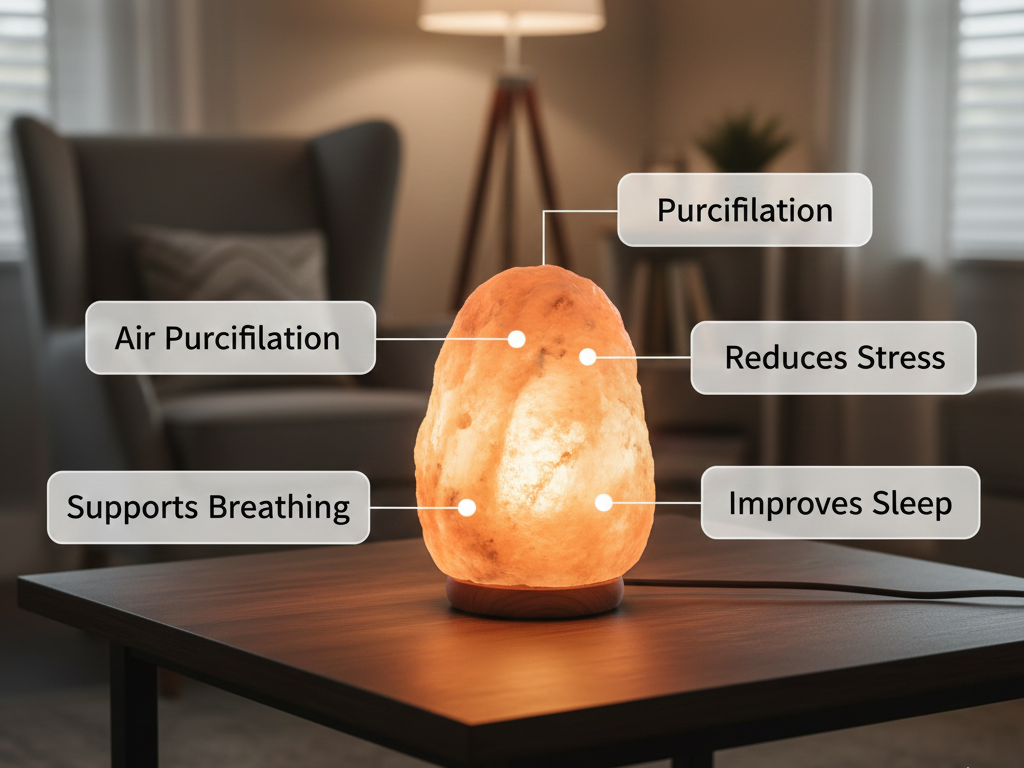
    People often search for Himalayan salt lamp benefits because these lamps are linked with air quality, breathing comfort, sleep, and general room atmosphere. Below is a simple look at the most common claims and what current sources say about them.

    Air purification claims

    Some users believe these lamps clean the air through moisture attraction and negative ions. Public health sources explain that the ion output is very low, so any air-cleaning effect should be seen as minor.

    Respiratory relief (asthma/allergy)

    Many hope a salt lamp can support breathing comfort. Current summaries note that halotherapy involves direct salt exposure, while a passive lamp does not offer the same level. It may add calm lighting, but it should not replace medical care.

    Sleep & mood (warm light effect)

    The warm amber glow can support a relaxed atmosphere before bedtime. This effect comes from the soft light rather than the salt itself. Users often keep these lamps in bedrooms for a calmer evening routine.

    Evidence snapshot: what the science says

    Many people want to know whether Himalayan salt lamps really deliver the benefits they claim. Scientific sources indicate that while these lamps create a soothing environment, the actual health effects are limited. Here’s a clear snapshot of claims versus evidence.

    ClaimEvidence levelSource(s)
    Air purificationLowHealthline, WebMD
    Respiratory reliefLowLamClinic, WebMD
    Mood/sleep improvementModerate (light effect only)Healthline

    Negative ions: required levels vs lamp output

    Salt lamps are often said to release negative ions, which can improve air quality and mood. In reality, therapeutic negative-ion effects require millions of ions per cubic centimeter, while a typical lamp produces only a tiny fraction.

    Controlled studies: what exists & what’s missing

    Few formal studies exist on Himalayan salt lamps specifically. Most evidence is anecdotal, with limited controlled trials. Current research mainly supports general light therapy effects rather than salt-specific health improvements.

    How to use a salt lamp effectively (practical tips)

    To get the most from a Himalayan salt lamp, place it in a dry area where it can be seen and enjoyed, such as a bedroom, living room, or office desk. Use the recommended wattage for your lamp size, typically 15–25 watts for small to medium lamps. Keep it on for several hours daily to maintain warmth and glow, and gently clean the surface with a dry cloth. Avoid excessive humidity to prevent sweating.

    Quick sizing chart

    Lamp sizeRecommended room size
    Small (2–5 lbs)50–100 sq ft
    Medium (6–11 lbs)100–200 sq ft
    Large (12–20 lbs)200–400 sq ft
    Extra Large (20+ lbs / clustered)400+ sq ft


    Buying guide: how to spot a real Himalayan salt lamp

    When choosing a Himalayan salt lamp, authenticity is key. Look for lamps sourced from the Khewra mines in Pakistan, which ensures genuine pink salt. Check the return policy to confirm the seller stands behind the product. Examine the light: a real lamp emits a warm amber glow, not harsh or overly bright light. The base should be sturdy, typically wood, to support the salt block safely. Avoid lamps that feel lightweight or poorly made, as these may be fake. Following this checklist helps you select a real, safe, and long-lasting lamp.

    Price ranges and red flags (too cheap, non-returnable)

    Genuine Himalayan salt lamps vary in price depending on size and type. Small lamps typically cost $15–$25, medium $25–$50, and large or basket-style lamps $50+. Be cautious of lamps priced far below these ranges, or sellers that do not offer returns or clear product information. Unrealistically low prices often indicate fake lamps, low-quality salt, or unsafe electrical components. Always buy from reputable sources to ensure authenticity and safety.

    Safety, recalls & maintenance

    Himalayan salt lamps are generally safe, but it’s important to follow basic electrical safety tips. Always use the correct bulb wattage, check that wiring and plugs are intact, and avoid placing lamps near water or damp areas. Some lamps have been recalled due to faulty wiring or fire hazards, so buying from reputable sellers is essential. Regularly dust and wipe your lamp with a dry cloth to prevent excess moisture and “sweating,” which can damage surfaces or furniture. Following these simple steps keeps your lamp safe and long-lasting.

    Is it safe around pets/children?

    Salt lamps are not toxic, but pets may be tempted to lick the salt, which can lead to salt ingestion issues. Keep lamps on stable surfaces out of reach of pets and young children. Supervision is recommended, and unplugging the lamp when unattended adds extra safety. This ensures everyone enjoys the warm glow without risk.

    Alternatives to salt lamps (evidence-based)

    While Himalayan salt lamps create a calming glow, evidence shows their direct health benefits are limited. For those seeking real air purification or respiratory support, halotherapy—using salt caves or halogenerators—provides higher exposure to salt particles and has some clinical study support. True air ionizers and HEPA filters are also effective alternatives, helping reduce airborne allergens, dust, and pollutants. Choose these devices when air quality or allergy relief is your main goal, while Himalayan salt lamps remain a decorative and mood-enhancing option. Combining both can give ambiance plus practical air support.


    Conclusion / Key Takeaways

    Himalayan salt lamps add a warm, calming glow to your home and can support relaxation and mood, but their health benefits are limited. Use them as decorative lighting, place them in dry areas, follow proper sizing for your room, and maintain the lamp by keeping it dry and clean. For any breathing, allergy, or sleep concerns, rely on evidence-based treatments and consult a doctor rather than expecting lamps to replace medical care. These simple steps ensure you enjoy your salt lamp safely and effectively.

    FAQ — Himalayan Salt Lamps (structured for schema)

    Q1: Do Himalayan salt lamps purify the air?
    A: They produce very few negative ions, so any air purification is minimal. Lamps mainly add soft ambient light rather than cleaning air.

    Q2: Can salt lamps help with allergies or asthma?
    A: Passive lamps do not provide the same effects as halotherapy. They may create a calming environment but are not a medical treatment.

    Q3: How can I tell if a salt lamp is real?
    A: Look for Khewra salt origin, warm amber glow, sturdy wooden base, and a reputable seller with a return policy.

    Q4: Are salt lamps safe around children and pets?
    A: Keep lamps out of reach. Pets licking salt may ingest too much; supervise children to prevent accidents.

    Q5: How long should I leave my salt lamp on?
    A: Several hours a day is enough to maintain glow and mild warmth; turn off when unattended for safety.

    Q6: How do I clean and maintain a salt lamp?
    A: Wipe gently with a dry cloth. Avoid water or humid areas to prevent sweating and surface damage.

  • Example Post for WordPress

    This is a sample post created to test the basic formatting features of the WordPress CMS.

    Subheading Level 2

    You can use bold text, italic text, and combine both styles.

    1. Step one
    2. Step two
    3. Step three

    This content is only for demonstration purposes. Feel free to edit or delete it.