Blog

  • Himalayan Salt Lamps: Benefits, Usage, and Safety

    Himalayan Salt Lamps: Benefits, Usage, and Safety

    You see these glowing pink lamps everywhere in Lahore and across Pakistan. They look cool. They feel cozy. But are they worth the money? What are the real himalayan salt lamp benefits? I’ve looked into these rocks. I’ll give you the simple truth. We’ll cover what they do and how to use them safely at home.

    What Are the Real Himalayan Salt Lamp Benefits?

    The primary benefit of a Himalayan salt lamp is that its soft, warm, amber-pink glow creates a calming ambiance that signals to your brain it is time to relax. This light is better for winding down at night than the harsh blue light from your phone, which helps set the stage for better sleep. Don’t buy the air-cleaning claims; buy it for the mood.

    The Magic is in the Color

    The warm color is key. It’s like a sunset inside your house. This color is soft on your eyes. It doesn’t confuse your brain. It tells your body to get ready for rest.

    This is why many people use a himalayan salt lamp near their beds. It truly helps with your bedtime routine.

    It’s a Piece of Home Art

    The lamp is beautiful. It makes any room feel special. It’s an easy way to add a bit of natural texture to your house. Its biggest benefit is the comfortable feeling it gives your space.

    Which Size Should You Buy?If you check the himalayan salt lamp price in pakistan, you’ll see prices change based on size. Size is important for the look, not for cleaning air.

    Sizing for Your Room

    • Small Lamp (2-3 kg): Perfect for a desk or a small bathroom. It’s an accent light.
    • Medium Lamp (4-6 kg): Good for a regular bedroom. This is a common size.
    • Large Lamp (himalayan salt lamp 6 8kg): This is a serious centerpiece. Use this in a big living room or a main hallway. The 9 inch himalayan salt lamp is usually in this weight range.

    Data Suggestion: PRICE CHECK (local context). Include a rough local price point comparison. Example: “In major cities like Lahore or Karachi, the price difference between a 3kg lamp and a 6-8kg lamp can be over PKR 2,500.”

    Placement is Key

    Put the lamp where you can see it when you relax. Don’t hide it. Make sure the cord is not stretched tight.

    Safety First: What Are the Real Dangers?

    There are two main himalayan salt lamp warning items you must remember.

    Danger 1: The Leaking Problem

    Real salt pulls water. If the air is humid, the lamp sweats. This is normal. This sweating is called weeping. It can damage wood furniture.

    This is the himalayan salt lamp leaking dangers part. Always put a coaster or a mat under the lamp base. Wipe up any salty water immediately.

    Danger 2: Pet Poisoning

    This is the most important warning. If your cat or dog licks the lamp, they can get very sick. Too much salt is toxic to them.

    Keep the lamp high up. Keep it out of reach. If your pet licks it, call a vet right away. This danger is real.

    Final Thoughts: The Verdict

    The himalayan salt lamp is a wonderful thing to own. It gives a great glow. It helps set a calm mood. Don’t worry about the scientific claims.

    Use the right size for your room. Keep it safe from pets. And always protect your furniture from the leaking dangers. Enjoy the peaceful light!

  • The Essential Guide to Himalayan Salt

    The Essential Guide to Himalayan Salt

    That pretty pink rock salt is everywhere now. You see it in shakers. You see it on big blocks. You hear about himalayan salt benefits all the time. But is this pink stuff really special? Is it good or bad for you? It’s confusing to keep up. I’ve researched this salt. I’ll tell you the real deal. We’ll talk about what it is and how to use it correctly.

    What Exactly is Himalayan Salt?

    Himalayan salt is a type of rock salt dug out from deep mines in the foothills of the Himalayan mountain range in Pakistan, making it millions of years old. The distinctive pink color comes from trace amounts of iron oxide, which is essentially rust mixed into the crystal structure. The taste is slightly different from regular salt.

    Where Does This Salt Come From?

    This himalayansalt comes from the Khewra Salt Mine. It is the second-largest salt mine in the world. The salt was left there when an ancient ocean dried up. It’s been sitting underground for ages. That’s why it is so pure. It was protected from modern pollution.

    The Makeup of Pink Salt

    Mostly, this salt is sodium chloride (NaCl). Just like table salt. But it has himalayan salt minerals too. Experts say it has about 84 different trace elements. These are things like potassium and magnesium. These extra bits give it the pink color and the mild flavor. This is the himalayan salt composition.

    Is Himalayan Salt Really Better for You?

    Himalayan salt benefits are often overstated. Is himalayan salt good or bad? It’s complicated.

    Mineral Power: A Tiny Amount

    Yes, it has more minerals than white table salt. But you eat so little salt every day. The extra minerals you get are tiny. You won’t notice a big difference. You get more potassium from half a banana. Himalayan salt is it good for you only in the sense that all salt is necessary for life.

    ou can use the following statistic and comparison in your Article 1 (The Essential Guide) or Article 4 (Health & Wellness):

    This comparison perfectly addresses the common misconception about the salt’s nutritional superiority.

    📊 Data Suggestion: Mineral Content Comparison

    While Himalayan salt is marketed as having up to 84 trace minerals, the amounts are minute compared to nutrient-dense foods.2

    Here is a specific, evidence-based example you can use in your content, focusing on Calcium or Iron:

    It’s still salt. It has the same amount of sodium as table salt. Too much salt is bad for blood pressure. Himalayan salt side effects mostly come from using too much of it, just like any other salt.

    The Taste Difference

    Does the himalayan salt taste better? Some people say it’s softer. It’s not as harsh as refined salt. Since the crystals are large, they hit your tongue differently. This can make food taste more complex. It’s mostly used for flavor and looks.

    How Should You Use Himalayan Salt?

    You can use himalayan salt uses in many ways. It’s not just for food.

    Edible Uses

    Use it just like regular salt. You can put it in a grinder. You can put it in a shaker. Himalayan salt edible uses are the most common. Sprinkle it on food after cooking. The crunch is great.

    People sometimes ask, “himalayan salt in urdu?” It is just called ‘Gulabi Namak’ (Pink Salt). Use it for cooking, baking, or curing.

    Salt Block Cooking

    You can buy himalayan salt in thick blocks. These blocks are used for cooking. You heat the block up. Then you cook meat or veggies right on the surface. This adds a salty flavor to the food. The block also keeps the food warm.

    Does Himalayan Salt Ever Expire?

    This is an easy answer. Himalayan salt expire? No. It’s a mineral. It was dug up after millions of years. It won’t spoil.

    Proper Storage

    Salt needs to be kept dry. If it gets wet, it will clump up. It will be hard to grind or pour. Keep it in a sealed container. Keep it far away from steam and high humidity. It lasts forever if stored dry.

    You can find out himalayan salt from where it comes from easily. It’s an ancient product. It has an endless shelf life.

    Final Thoughts: The Essential Salt

    Himalayan salt uses are wide. It’s a beautiful, clean salt. It has a great story. Himalayan salt benefits and side effects are mostly the same as any salt: use it in moderation. Get it because you like the color. Get it because you like the taste. It makes cooking feel a bit more special.

  • How to Safely Change the Bulb and Check the Cord.

    How to Safely Change the Bulb and Check the Cord.

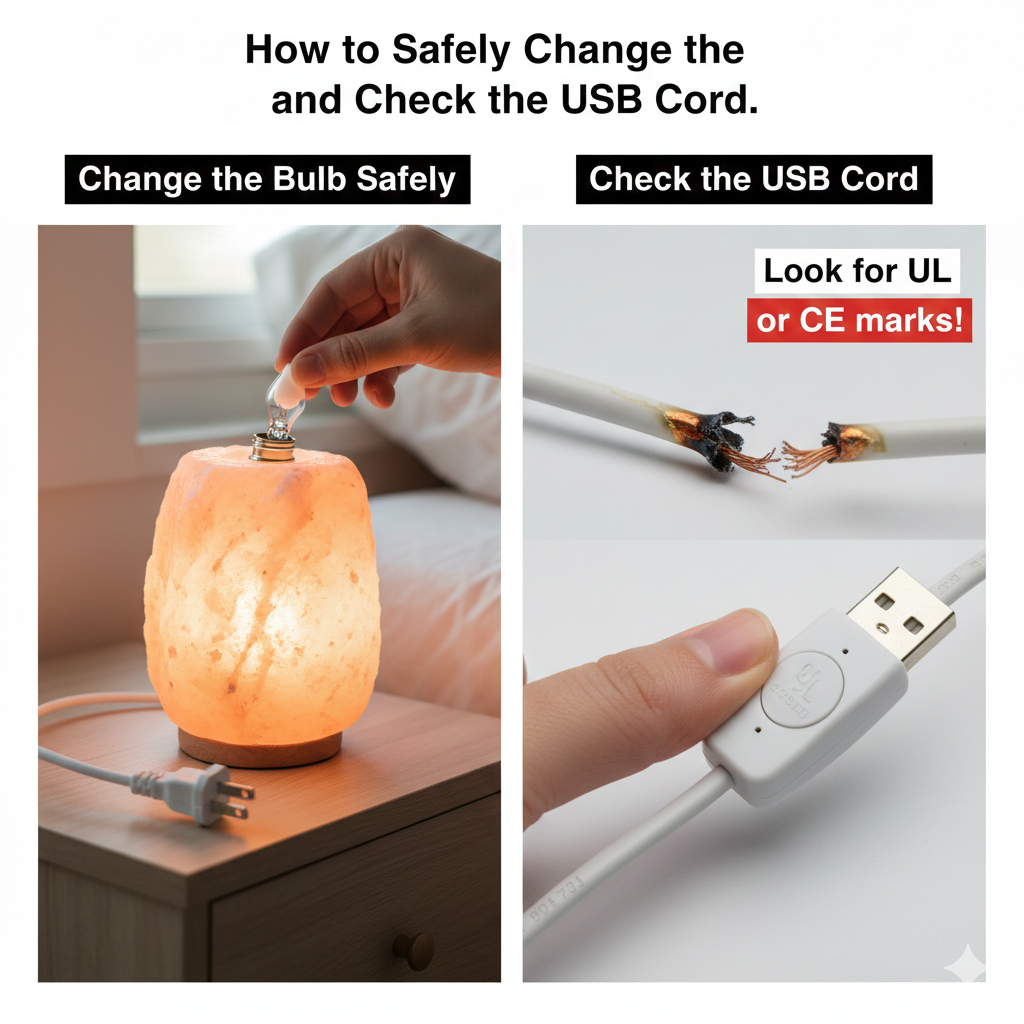
    My Salt Lamp Bulb Died: How to Safely Change the Bulb and Check the Cord.

    Your lamp suddenly went dark. It won’t glow anymore. Don’t panic. The salt didn’t run out. The bulb just burned out. This is normal. Changing the bulb is simple and safe if you take two quick steps first. We also need to check the cord. Cheap cords can be dangerous. I’ll show you exactly how to do this safely and easily.

    What Kind of Bulb Does My Salt Lamp Need?

    Most Himalayan salt lamps use a small, 15-watt incandescent candle-style bulb because these bulbs get hot enough to dry the salt and prevent it from weeping. You must use a bulb that generates heat, not a cool LED bulb, otherwise the lamp will pull moisture and start to melt. Heat is more important than light output for these lamps.

    The Right Kind of Heat

    A salt lamp isn’t like a regular light. It needs heat for its main job. That job is drying itself out.

    LED bulbs are great for saving energy. But they stay cool. If you use a cool bulb, the salt will soak up moisture. Then you get salty puddles. Always use the small, warming bulbs.

    The Right Size

    The hole in the salt rock is small. You need a small bulb base. Most lamps use the E12 base, which is also called a candelabra base. Check the socket size before you buy a replacement bulb.

    Step-by-Step: Changing the Bulb Safely

    Safety first. We are dealing with electricity and a heavy rock.

    Step 1: Unplug It!

    This is the most important step. Always unplug the entire cord from the wall. You don’t want to touch the socket while it’s live.

    Wait a few minutes. The old bulb will be hot. Give it time to cool down before you touch it.

    Step 2: Remove the Cord

    The bulb usually sits inside a small plastic holder. The holder pulls out from the hole at the bottom of the lamp. Pull it out slowly.

    Hold the plastic base. Twist the old bulb out. It twists just like a normal light bulb. Don’t force anything.

    Step 3: Put the New Bulb In

    Screw the new bulb into the socket gently. Do not screw it in too tightly. It might break the glass or the fragile socket.

    Push the cord holder back into the lamp hole. Make sure the bulb sits straight up. The bulb shouldn’t touch the inside of the salt rock.

    Checking Your Cord for Danger

    The cord is the most common failure point. Cheap lamps often use bad cords.

    Look for Burn Marks

    Unplug the cord and look at the plastic holder. Look at the wires right where they enter the plastic. If the plastic looks melted or scorched, the cord is bad.

    If it smells burnt, throw it out immediately. A melting cord is a fire hazard.

    Check the Switch

    The dimmer switch on the cord can wear out. If the lamp flickers often, the switch might be dying. Replace the whole cord set if this happens. Don’t risk it.

    Data Suggestion: STATISTIC/FACT. Remind users that cheap replacement cords often lack safety certifications. Example: “Always look for a safety certification mark, like CE or UL, printed directly on the plastic cord itself.”

    Final Thoughts: Keep the Glow On

    Changing the bulb is a simple job. It should take less than five minutes. Do it safely.

    Always use a warming bulb. Always check your cord for signs of damage. Keep your lamp maintained to enjoy its glow without worry.

  • Are Himalayan Salt Lamps Safe for Your Cats and Dogs?”

    Are Himalayan Salt Lamps Safe for Your Cats and Dogs?”

    Salt Lamp Dangers: Are Himalayan Salt Lamps Safe for Your Cats and Dogs?

    You love that pink glow. It makes your room feel cozy. But your cat or dog loves it too, maybe a little too much. They might try to lick it. This is a serious problem. Himalayan salt lamps are dangerous to pets if they lick them. Too much salt can make your pet very sick. You must take steps to keep your lamps out of reach.

    Is It Safe If My Pet Licks the Salt Lamp?

    No, it is not safe if your pet licks the salt lamp, because the huge amount of concentrated rock salt can quickly cause sodium ion poisoning in cats and dogs, which is life-threatening. Just a few minutes of licking can deliver a toxic dose of salt to a small animal. You need to treat the lamp like a dangerous cleaning chemical.

    Why Salt is a Big Problem

    Your pet needs salt. We all do. But they need tiny amounts. A salt lamp is pure, heavy salt.

    If a dog eats salty snacks, it’s bad. If a cat licks a solid chunk of salt, it’s much worse. The salt goes right into their body fast. This raises their blood sodium levels quickly. This is called salt toxicity.

    The Signs of Poisoning

    You need to know the signs. If you see your pet licking the lamp, watch them closely. If they are sick, you must act fast.

    Look for these problems:

    • Being very thirsty, drinking lots of water.
    • Throwing up or having tummy trouble.
    • Feeling weak or clumsy.
    • Being sleepy or confused.

    If you see these signs, call the vet immediately. Don’t wait.

    How to Keep Pets Away From the Lamp

    Your best defense is placement. The lamp needs to be where the pet can’t reach it.

    Put It Up High

    If your dog is big, put the lamp on a high shelf. If your cat likes to jump, put the lamp somewhere locked. A cabinet with a glass door is a great spot.

    Don’t put it on a low bedside table. Your pet can easily bump it or access it there.

    Think About Salt Bowls

    If you use a salt lamp, don’t use salt licks or salt bowls nearby. This only makes the pet want to lick the rock more. Remove other temptations.

    What if My Pet is Obsessed?

    Some pets just can’t resist. They are drawn to the taste or the glow. If you have a pet that constantly tries to lick the salt, you have one choice.

    Remove the Lamp

    It’s just not worth the risk. If your pet is determined, you must remove the lamp from that room. Your pet’s health is more important than a soft glow.

    You can still use the lamp safely. Put it in an office or a basement where the pets never go. Safety must come first every time.

    Final Thoughts: Be Responsible

    The salt lamp is a lovely piece of décor. But it is also a huge block of salt. That salt is a hazard to small animals.

    Be a responsible owner. Place the lamp somewhere high and secure. Check the floor for salty drips often. If you can’t keep your pet away, remove the lamp completely. A healthy pet is worth more than any glow.

  • The Salt Lamp Size Guide: How Big of a Lamp Do You Actually Need?

    The Salt Lamp Size Guide: How Big of a Lamp Do You Actually Need?

    ou found the perfect pink lamp. Now comes the hard part. How big should it be? A tiny lamp in a huge living room won’t do much. A massive lamp next to your bed might be too much. It’s not about making a huge change to the air. It’s about getting the right glow for your space. I’ll show you how to match the rock size to your room size easily.

    Does the Size of the Lamp Really Matter?

    Yes, the size of your salt lamp matters, but mostly for its light output and visual impact in a room. A larger lamp casts a wider, deeper amber glow, making it a better light source for a big area, whereas a small lamp is best for creating a cozy, dim spot near your desk. Size dictates the ambiance and feeling it creates in the room.

    The Ambiance Factor

    A small lamp gives a very tiny pool of light. It’s fine for a desk corner. But if you put it in a big hallway, it just disappears. It won’t help set a calm mood for the whole room.

    A bigger lamp gives a stronger, warmer wash of light. This light can reflect off walls. The larger the lamp, the larger the visual comfort zone it creates.

    Forget the “Ion Coverage”

    Some sellers give coverage numbers. They say a 10-pound lamp covers 100 square feet. This is usually based on those old ion claims.

    We know the air-cleaning effect is tiny. So, ignore those coverage numbers. Focus only on the light and the look.

    Matching Lamp Weight to Room Size

    Let’s keep this simple. We’ll use the weight of the lamp.

    Room TypeEstimated Weight (Lbs)Visual Effect
    Desk/Small Bathroom2–5 LbsLocalized glow; accent light only
    Small Bedroom (10×12 ft)6–8 LbsSoft bedside light; nice warm glow
    Medium Living Room (15×15 ft)9–12 LbsStronger ambiance; centerpiece glow
    Large Open Space (20×20 ft)15+ LbsDeep, whole-room coloring; high impact

    Best Placement for Maximum Glow

    It’s not just the size. Where you put it changes everything.

    For Sleep and Calm

    Put the lamp near your bed. This is the spot where you see it last. It serves as your final, warm light source before you close your eyes.

    Don’t hide it behind a curtain. Don’t put it way across the room. Place it on the surface closest to your head.

    For a Warm Entryway

    If you put a lamp near your front door, make it big. It should be a statement piece. It gives a nice, warm welcome home.

    It sets a calm tone the moment you walk in. The lamp should be easy to see.

    Avoid These Spots

    Never place the lamp on an expensive piece of wood without protection. Remember, they sweat. The salty water will ruin the finish. Always use a coaster or a mat.

    Also, keep it out of high-traffic areas. They are heavy. They are fragile. They can hurt a toe if you knock them over.

    Final Thoughts: Buy for the Look

    Don’t stress over the numbers. Just look at the room. If the lamp looks tiny, it is too small.

    A salt lamp is home décor. It’s a tool for relaxation. Pick the size that looks right to your eye. If you want a whole room to feel cozy, buy a big one. If you just want a little light, buy a small one. Simple as that.

  • How to Stop Your Himalayan Salt Lamp from Melting (Weeping).

    How to Stop Your Himalayan Salt Lamp from Melting (Weeping).

    You come home and see it. Your pink salt lamp has a puddle around the bottom. It looks like it’s weeping, or melting. You get scared. Is it a fake? Did you ruin it? No. This is normal. It means your lamp is real. It’s just too wet. It’s an easy fix. I will tell you exactly how to stop the “crying” and save your furniture.

    Why is My Lamp “Crying” or “Sweating”?

    Your lamp is weeping because real salt naturally pulls water out of the air. This process is called hygroscopy. When the air is very humid—like after a long rain—the salt pulls in too much water, and that water turns into salty drips on the surface. This is actually a good sign that you bought an authentic lamp.

    The Sponge Effect

    Think of your salt lamp as a sponge. When your room is very wet (high humidity), the sponge quickly soaks up that moisture. If the sponge gets too full, the water drips out. That’s the salty water you see on your nightstand.

    This happens most in:

    • Summer months.
    • Rooms with steam (like near a bathroom or kitchen).
    • During very long rain spells.

    The Simple Cure: Turn It ON!

    This is the fastest and best solution. You need to dry out the sponge.

    Use the Bulb’s Heat

    The light bulb inside the lamp does two jobs. It gives the warm glow. More importantly, it gives off heat.

    That heat is essential. It warms the salt. The warmth makes the water on the surface evaporate. It pushes the moisture back into the air before it can drip. Your lamp needs to be warm to stay dry.

    Data Suggestion: PRACTICAL TIP. Provide a clear time frame. Example: “If your lamp is weeping, leave it on for 24 hours straight. The constant heat will dry the surface completely.”

    The rule is simple: The longer it is on, the dryer it stays.

    What to Do When You Go Away (Vacation Strategy)

    If you turn the lamp off for a few days, it starts soaking up water without a way to dry itself. This is when the worst weeping happens.

    The Bag Trick

    If you are leaving for a vacation (or even a weekend), you have to cut off its air supply.

    1. Turn it OFF. (The heat can be a fire risk if left unattended for many days).
    2. Unplug it.
    3. Wrap it tight. Use a plastic bag, like a big zip-lock bag. Seal it completely.

    This keeps the humid air away from the salt. It can’t pull water if the water can’t reach it. This is the only way to store it safely.

    Quick Fixes for a Wet Lamp

    If you find a puddle, don’t panic. Fix it quickly to save your furniture.

    Step 1: Wipe the Mess

    Unplug the lamp first. Wipe the wood base and the surface under the lamp with a dry cloth. You must remove the salty water. If you leave it, it will ruin wood or metal.

    Step 2: Heat Up the Lamp

    Use a low-heat hair dryer. Aim it at the lamp surface for 5-10 minutes. This will quickly dry the outside surface. Make sure the lamp is unplugged when you do this.

    Step 3: Keep it Running

    Plug it back in and keep it running for the next few days. This prevents the moisture from settling again.

    Final Thoughts: It’s a Good Sign

    Don’t be mad at your lamp for crying. It’s just doing its job. It’s proof that your expensive pink crystal is real rock salt.

    The key to a happy, dry lamp is heat. Keep the heat on. If you leave, put it in a bag. Simple care means you can enjoy that beautiful, warm glow for years.

  • How to Spot a Fake Himalayan Salt Lamp: 5 Ways I Check Mine

    How to Spot a Fake Himalayan Salt Lamp: 5 Ways I Check Mine

    You want the real deal. Nobody wants to pay good money for fake junk. The salt lamp market is full of copies. You might be staring at a piece of molded glass or plastic right now. I’ve bought duds before. It happens to everyone. I learned five simple tricks. Use these to check if your pink rock is the real thing.

    What’s the Easiest Way to Spot a Fake Lamp?

    The easiest way to spot a fake salt lamp is by checking its ability to “weep” or sweat when the light is turned off in a humid room. Real Himalayan salt pulls moisture from the air, but fakes, which are often glass or plastic, will stay completely dry no matter what. A real lamp needs care because it’s real salt.

    Why Fakes Exist

    Salt lamps are popular. When something gets popular, people copy it. They use cheaper materials. This way, they make more money.

    They might use cheap glass. Sometimes they use a resin. These don’t have the minerals. They don’t have the hygroscopy. They only have the look.

    Test 1: The “Sweat” Test (The Moisture Trick)

    This is the most reliable check. It goes back to science. Real salt pulls water.

    The Hygroscopy Signal

    If you turn off your real lamp for a few days, it pulls moisture from the air. Especially in summer. The lamp will look like it’s crying. It will feel damp. This is normal.

    A fake lamp? It won’t pull any water. It will stay dry and smooth always. If it doesn’t weep, it’s probably cheap glass.

    Data Suggestion: TABLE. A simple comparison table highlighting the result of the moisture test.

    FeatureReal Himalayan Salt LampFake Lamp (Glass/Resin)
    Humidity TestBecomes slightly damp or “sweats”Stays completely dry and smooth
    AppearanceOften uneven, visible cracksLooks too perfect, too clear

    Test 2: The Light Test (Color and Clarity)

    The pink color comes from those tiny minerals. This affects the light.

    Is the Light Too Bright?

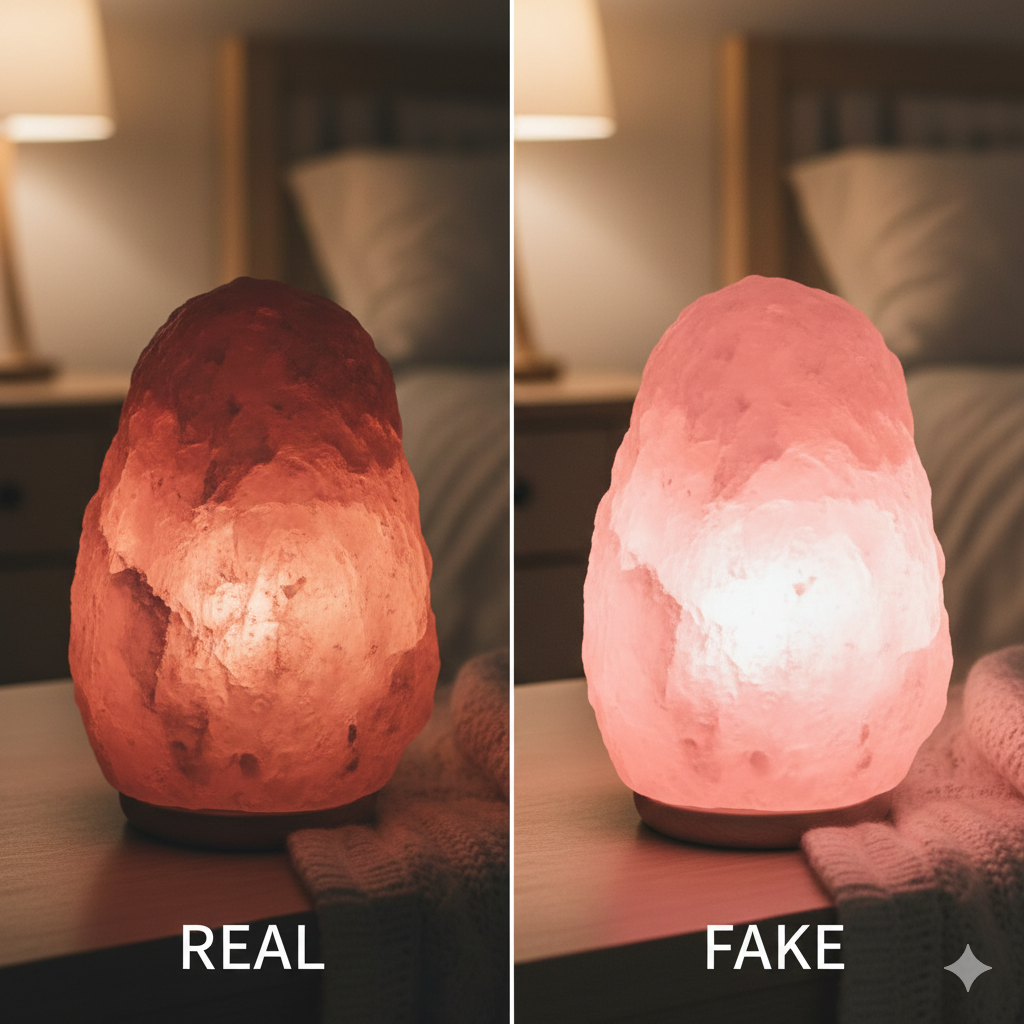
    A real salt lamp is muted. The light should be soft. It should feel like a deep, sunset orange. You can look right at it without squinting.

    If the lamp is crystal clear and super bright, it might be fake. A fake lamp lets too much light through. The real rock blocks some of the light.

    Not Too Uniform

    Real rocks are natural. They have flaws. The color should change. One part might be darker pink. Another part might be almost white. If your lamp is the same perfect color all over, be careful. Perfect usually means man-made.

    Test 3: The Crumb Test (Durability)

    Don’t smash your lamp! But you can feel it.

    Is It Too Hard?

    Salt is fragile. If you bump a real salt lamp, a tiny crumb might break off. It dents easily. If you scratch it hard, it might leave a powder mark.

    Fake lamps are usually tough. They feel like heavy plastic or glass. They don’t dent easily. They are too hard for a simple rock salt crystal. Real salt is brittle.

    Test 4: The Hot Test (The Bulb Check)

    This relates to safety and material.

    Does It Stay Cool?

    A real salt lamp gets warm from the bulb. It shouldn’t get hot enough to burn you. The heat is needed for the hygroscopy.

    If your lamp stays totally cool even after hours of use, it might be made of material that doesn’t conduct heat well. This is another red flag. It must be slightly warm to the touch.

    Final Thoughts: Buy From a Trusted Source

    It all comes down to trust. Buying from a good seller is the easiest way to avoid fakes. A reputable seller will tell you where the salt comes from. They will be honest about the material.

    Use these simple tests when your lamp arrives. Check for the moisture. Check the softness of the light. Don’t let a bad seller ruin your cozy home mood. Get the real thing, and enjoy that warm glow.

  • Do Houseplants Actually Clean Your Air? What NASA Found Out

    Do Houseplants Actually Clean Your Air? What NASA Found Out

    You see a lot of people buying plants. They say plants make the air super clean. They talk about a famous NASA study. It sounds great, right? A beautiful way to fix dirty indoor air. But here’s the kicker. What NASA found out isn’t the whole story. You need a lot more plants than you think.

    What Did That Famous NASA Study Really Say?

    The 1989 NASA study found that certain houseplants clean chemicals like formaldehyde from a small, sealed chamber, but the study didn’t test real houses. It showed plants can clean, but you’d need hundreds of plants in a normal room to get the same effect quickly. The plant power is real, but weak.

    The Tiny, Sealed Room Test

    NASA’s goal was space. They needed to know how to keep air clean on a spaceship. So they put plants in a small box. This box was sealed up tight. They put bad chemicals, called VOCs, into the box.

    The plants did a great job. They sucked up the bad stuff. This was very good news for astronauts. But your living room is not a sealed box. Your doors open. Air leaks everywhere. The study was for space, not your house.

    Data Suggestion: FACT/SOURCE. Include a simple comparison metric. Example: “Experts calculate you’d need about 10 plants per square meter to get the air cleaning effect NASA saw in their tiny, sealed chamber.”

    So, one plant on your desk won’t fix everything. But that doesn’t mean they’re useless.

    What Are These “VOCs”?

    VOCs is a short name for Volatile Organic Compounds. These are nasty chemicals. They come from regular things you use.

    Think about new carpet. Or paint. Even your cleaning spray. They all release VOCs into your air. These chemicals can make you feel sick. Houseplants have a little skill for pulling them out.

    The Real Reason Plants Help You

    We know plants don’t clean the whole house fast. So why keep them around? It’s for you.

    Making the Room Feel Better

    Plants make a room feel nicer. They add life and color. When you look at green things, you feel calm. It lowers stress.

    This feeling is real. It makes your home a better place to be. Plants are great for your mind. They are silent roommates who cheer you up.

    More Humidity, Less Dryness

    Plants release water vapor. They add humidity to the air. This is important, especially in winter.

    Dry air can make your throat scratchy. It can dry out your skin. A few plants can help put a little moisture back in. It’s like a tiny, living humidifier.

    The Best Plants for Indoor Air

    If you do want to use plants, some are better than others. They have better lungs, so to speak.

    Snake Plants are Tough

    The Snake Plant is very popular. It’s hard to kill. This plant is good because it works at night. It takes in carbon dioxide while you sleep. Most plants stop at night.

    It’s easy to care for. You can forget to water it for weeks. It’s a perfect starter plant.

    Spider Plants are Fighters

    The Spider Plant makes lots of babies. It fights off formaldehyde and carbon monoxide. It’s also very safe for pets. That’s a huge plus.

    Hang it up high. Let the little babies dangle down. It looks nice and does a little work for you.

    The Easiest Way to Clean Your Air

    Forget the chemicals for a minute. The simplest way to clean your air isn’t a plant. It’s a door.

    Open a Window!

    The fastest way to clean bad air is to let it out. Open your windows for five minutes a day. Even in winter. This gets the old, stale air out. It brings fresh air in. It costs zero dollars.

    Wipe the Leaves

    Your plants gather dust. That dust is full of allergens. If you want your plants to “clean” the air, you must keep them clean. Wipe the leaves once a week. Use a wet cloth. Dirty leaves can’t breathe well.

    Final Thoughts: The Plant Truth

    Houseplants clean air, but they are not magic filters. Don’t buy a plant thinking it will cure your allergies. Buy it because it makes your room feel better.

    The true gift of plants is to your mood and stress. Use the right plants. Keep them clean. Open your window daily. That’s the real smart way to have clean air in your home.

  • Essential Oil Diffusers: Do They Really Help Your Stress and Sleep?

    Essential Oil Diffusers: Do They Really Help Your Stress and Sleep?

    You see them in spas. Your neighbor has one. These little machines puff out nice smells. You heard they can calm you down. Maybe even help you sleep better. But does a tiny cloud of lavender oil actually fix big problems like stress? The short answer is complicated. It’s more about how your brain works. It’s not magic. It’s psychology and smell.

    Do Diffusers Actually Help Your Stress?

    Yes, diffusers can help you feel less stressed, but the effect is mostly because of your memories and not a medical cure. Smells are directly tied to your brain’s emotion center. A pleasant smell reminds you of a calm time, helping your body relax. It’s a mental trick that works well. We use scent to change our mood easily.

    The Brain’s Shortcut

    Your sense of smell is fast. It goes right to the part of your brain that handles feelings and memories. It skips the thinking part. That’s the key.

    Think about Grandma’s baking. One sniff brings back happy feelings. It makes you feel safe. Essential oils work the same way. Lavender smells relaxing because you learned it means rest.

    Data Suggestion: FACT. Include a statistic about the direct link between the olfactory bulb and the limbic system. Example: “Your nose sends signals to the memory part of your brain faster than any other sense.”

    It’s a powerful tool for a quick mood lift. It won’t pay your bills. But it can make the anxiety easier to handle for a minute.

    Which Scents Actually Work?

    Not all oils are the same. Some make you sleepy. Others wake you up. You have to pick the right one for the job.

    • For Calm and Rest: Try true Lavender. Maybe Chamomile. These are the classics for a reason.
    • For Focus: Peppermint is great. Lemon can help too. Use these when you need to get things done.

    I use Peppermint when I work. It’s better than another cup of coffee. It keeps my mind clear.

    Can Diffusers Fix Your Sleep Problems?

    No gadget can truly cure insomnia. If you can’t sleep, you need to look at your whole routine. But diffusers can be a helpful friend. They set the stage.

    Setting a Bedtime Signal

    Your body loves routines. It looks for signals. Just like a soft lamp, a scent can be a signal.

    Start diffusing a sleep scent, like Cedarwood, an hour before bed. Your nose learns that scent means sleep time. When you smell it, your body starts to slow down. It’s a habit maker. Habits are stronger than pills.

    Multimedia Suggestion: INFOGRAPHIC. A visual showing a clock icon at 9 PM turning on a diffuser icon, then a person icon falling asleep at 10 PM. Caption: “Train Your Brain: Scent as a Sleep Cue.”

    I always use a simple blend. It makes the bedroom feel different. It feels like a safe, cozy place just for rest.

    Quality is a Must

    Don’t buy the cheapest oil you find. Cheap oils are often fake. They use synthetic smells. These chemicals can actually give you a headache. They won’t help you rest.

    Look for 100% pure oil. This makes a difference in safety and how well it smells. You get what you pay for here. A good bottle lasts a long time.

    Safety and Practical Tips

    This isn’t just a pleasant hobby. We need to talk safety. You’re putting chemicals into your air.

    Keep Them Away From Pets

    This is crucial. Many oils are toxic to cats and dogs. Teat tree oil is a big problem. Even some citrus oils are bad.

    Your pets breathe the same air. They are smaller than you. The oils affect them fast. Don’t run a diffuser around pets without checking first. Ask your vet if you aren’t sure. It’s better to be safe than sorry.

    The Clean Up

    Diffusers need cleaning. They get gunky. If you don’t clean it, bacteria can grow in the water. Then you are breathing that bacteria. That’s not good for anyone.

    Clean it once a week. Use a cotton swab and a tiny bit of alcohol. It’s simple maintenance. A clean machine gives clean air.

    Final Thoughts: It’s All About Routine

    A diffuser won’t make your stress disappear. It won’t fix deep sleep problems. But it is a wonderful addition to a good routine.

    It gives you a calming scent. It sets a signal for your brain to relax. It’s a great way to mark the end of your workday. Use the right oil. Keep it clean. And use it to help you breathe a little easier. That’s what they are really good for.