Jeśli serwis podaje mało informacji (ukrywa zasady bonusu albo nie pokazuje podstawowych parametrów gry), trudno mówić o przejrzystości. To pomaga ocenić, czy dane polskie kasyno online legalne rzeczywiście działa przejrzyście i czy daje graczowi jasne reguły zabawy. To (że strona otwiera się w Polsce), ma polską wersję językową i pozwala założyć konto, nie oznacza jeszcze, że działa legalnie w polskim modelu. (more…)
Whales are among the largest and most remarkable animals on Earth. These marine mammals live in oceans around the world, from warm tropical waters to the cold seas surrounding the poles.
Life Beneath the Surface
Although whales spend their lives in water, they breathe air through blowholes located on top of their heads. They must regularly return to the surface to breathe before diving again in search of food or traveling through the ocean.
Whales are warm-blooded, give birth to live young, and nurse their calves with milk. A thick layer of fat called blubber helps protect them from cold water and stores energy during long migrations.
Two Main Groups
Whales are generally divided into baleen whales and toothed whales. Baleen whales filter small animals from the water using flexible plates inside their mouths. This group includes blue whales, humpback whales, and gray whales.
Toothed whales use teeth to catch fish, squid, and other prey. Many of them also use echolocation, producing sounds and listening for returning echoes to understand their surroundings. Sperm whales, belugas, and orcas belong to this group.
The Blue Whale
The blue whale is the largest known animal to have ever lived. An adult can grow longer than a city bus and weigh well over one hundred tonnes. Despite its enormous size, it feeds mainly on tiny crustaceans called krill.
Communication and Migration
Whales communicate using clicks, whistles, pulses, and complex songs. Some sounds can travel across great distances underwater. Humpback whales are especially famous for their long, patterned songs.
Many species migrate thousands of kilometres each year. They often feed in cold, nutrient-rich waters before traveling to warmer regions where they mate and give birth.
Protecting Whales
Commercial hunting once caused severe declines in many whale populations. Today, whales also face threats from fishing gear, ship collisions, underwater noise, pollution, and changes to ocean ecosystems.
Conservation programs, safer fishing practices, protected habitats, and international cooperation can help whale populations recover. Protecting whales also supports healthier oceans because these animals play an important role in marine food webs and nutrient cycles.
Pink Himalayan Salt vs Table Salt: Health Comparison
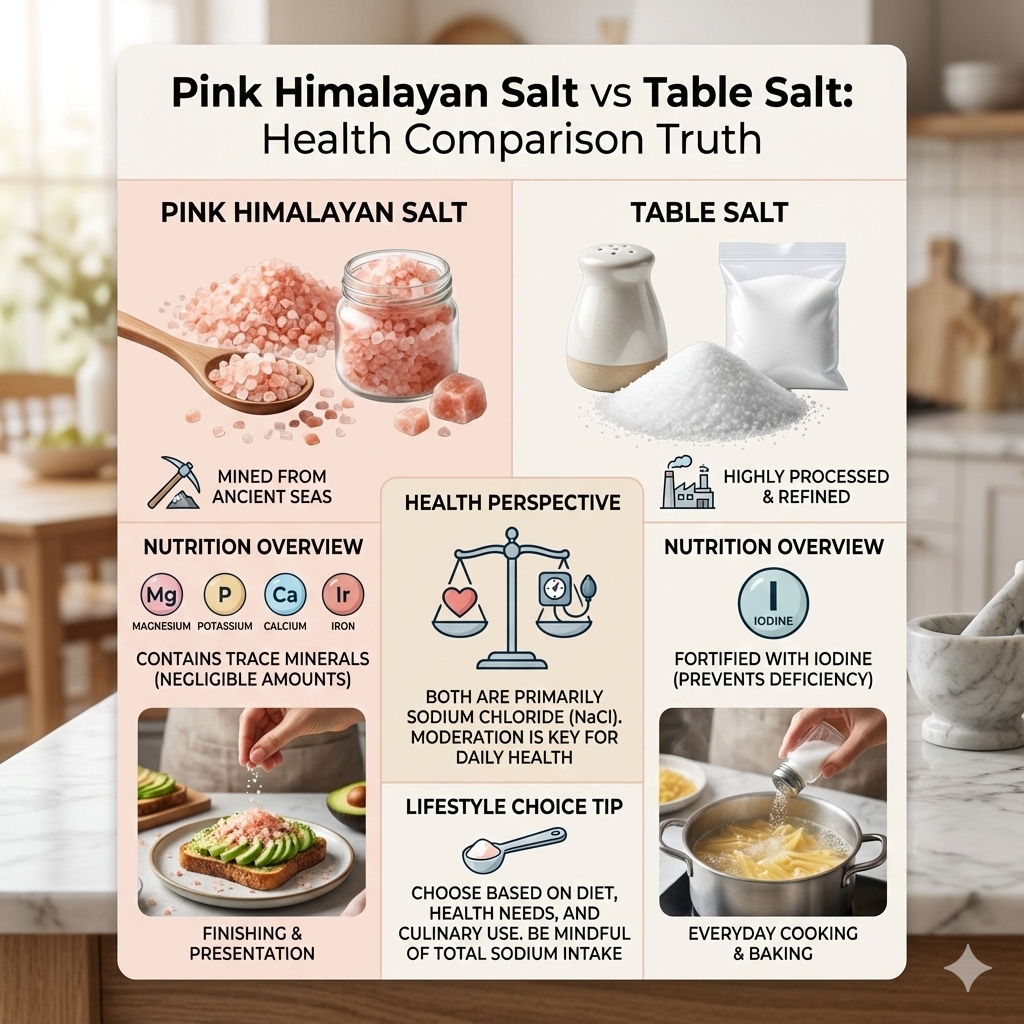
The pink Himalayan salt vs table salt is the frequent question of individuals who want to make dietary choices.They are both types of sodium chloride although there are differences in the source, processing and nutrition profile.The salt product is the Pink Himalayan salt, which is found at the Khewra salt mine in Pakistan and whose natural trace minerals are known.Table salt is very fined and normally supplemented with iodine to promote the health of the thyroid.Here is the comparison between these foods in terms of health outcomes, mineral content, daily use, and safety, thus you can know which salt will suit your diet, cooking and long-term health requirements.
What Is Pink Himalayan Salt?
Pink Himalayan salt is an undulented rock salt that is primarily obtained by the extraction of the Khewra salt mine located in Pakistan which is one of the oldest and largest salt mines in the world. It was developed millions of years ago in the evaporation of the old ocean beds that enabled the trace minerals such as calcium, magnesium, and potassium to be incorporated into its crystal structure. Pink Himalayan salt is not refined and is only a little aromatized; as a result, it is able to preserve its natural texture and color. It is a pure form that explains why it is commonly utilized in cooking, health and beauty products as well as decorative objects like salt lamps and bath salts.
What Is Table Salt?
Table salt is a highly refined sodium chloride that is industrially manufactured. Refining process involves eliminating natural minerals in an effort to come up with a homogenous, fined-grain salt that has a uniform taste. Procedures are followed after purification to include iodine by way of iodization to assist in the preventive actions of lack of iodine, which is conducive to normal thyroid functioning. To prevent clumping and extend shelf life, anti-caking agents are also added in. Due to this high refining process, table salt appears white and dissolves easily, however, it is no longer in its form of trace minerals in natural salts. Typical applications are typical cooking and packaged foods, as its cost is low, and it is widely available.
Nutritional Comparison (Side-by-Side)
Comparing the pink Himalayan salt and table salt, there is not much difference in the sodium content considering that both are composed primarily of sodium chloride. The variation is reflected in trace minerals. Occasionally it is formed by small quantities of minerals such as potassium, calcium and magnesium in Pink Himalayan salt and this is what makes it light pink in color. However, during the refining process, all these minerals are extracted in table salt; however, iodine is added intentionally to it. Iodine is beneficial to have in thyroid, and trace minerals in Himalayan salt occur in insignificant quantities and cannot be regarded as a significant source of nutrients. The body absorbs sodium in an equal manner in both salts.
Health Benefits — What’s Real and What’s Not
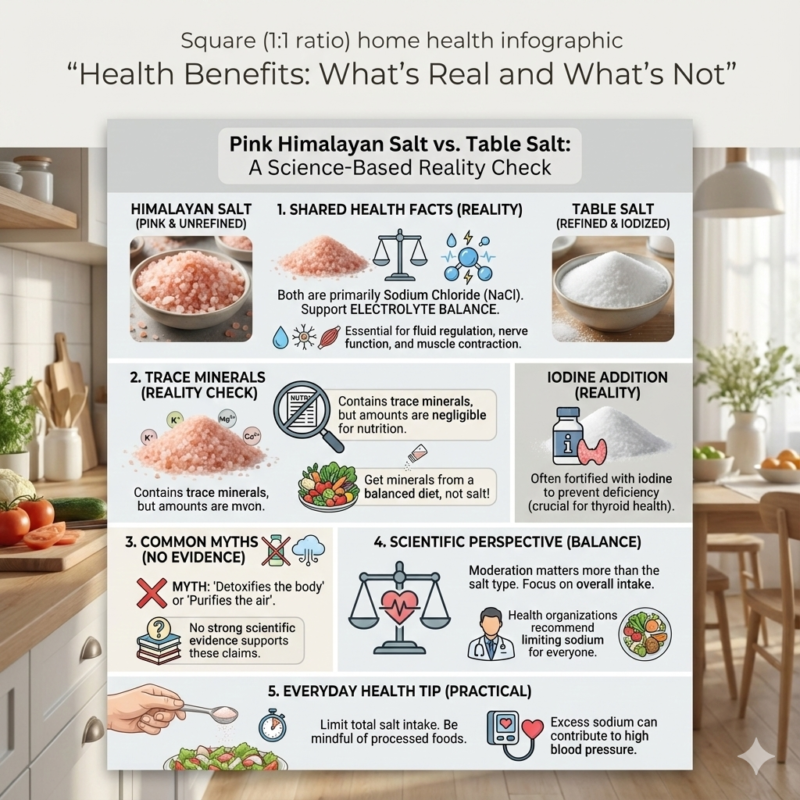
The controversies about pink Himalayan salt and table salt will always centre on whether it is healthy or not, but one should be able to differentiate between myths and facts. The two types of salts facilitate the normal electrolyte balance since sodium aids in the regulation of fluids, nerve impulses and muscle activity. The pink Himalayan salt has trace minerals but in insignificant amounts. The argument of purifying the body or remedying conditions does not have significant scientific proofs. Scientifically moderation is of more importance than the type of salt. Overdose of any salt may impact blood pressure whereas a conscious use aids in daily health requirements.
Iodine, Thyroid Health & Who Should Be Careful
Iodine is also important in thyroid health as it is believed to facilitate hormone synthesis which indicates the metabolism and growth. The principal difference between pink Himalayan salt and table salt is iodine. The Himalayan salt is unrefined and may not have added iodine whereas the table salt may be iodized to aid against deficiency. Iodine requirements are greater in children, pregnant women, and the older population, and thus consumption of iodized salt should be avoided because it may pose a greater risk in the long term. Iodized salt is an important aspect in areas where intake of iodine is low. The selection of the appropriate salt should be based on the balance of the diet and not on trends.
Impact on Blood Pressure & Heart Health
In the case of pink Himalayan salt and table salt, it should be known that both are still sodium salts. Regardless of the type of salt consumed, sodium in excess will bump up blood pressure and add pressure on the heart. Himalayan salt also has trace minerals but these minerals do not negate the effects of excess sodium intake. To maintain good health in the heart, the amount of salt consumed is more important than its type. Majority of health systems recommend that one should minimize daily sodium amounts and supplement it with foods rich in potassium. Considering that you are at risk of high blood pressure, kidney problems, or heart conditions, it is advised to take the medical recommendations into account and do not substitute prescribed recommendations with the dietary trends.
Taste, Cooking & Everyday Use
Pink Himalayan salt has a small but slightly mineral taste compared to the clean and sharp taste of table salt. It has a crass crystal texture, so it is ideal to splash on the dishes or to season grilled meats, while finer salt in the Himalayas can be used in cooking and baking activities. Table salt is dissolves easily, has equal size/grain, and includes anti-caking added, which is suitable to baked products and sauces. You can select the correct salt in each recipe but knowledge of texture and consistency can assist you to select the correct salt in each recipe. Most chefs and domestic cooks like Himalayan salt because of its aesthetic look and taste, also it can replace the table salt in most recipes.
Which Salt Is Better for You?
It is up to you to use pink Himalayan or table salt, as it depends on your lifestyle, diet and health status. Depending on their use, either salt may be used in the cooking; however, Himalayan salt might have trace minerals and taste, which some of them like. People with deficit of iodine should have adequate intake then they importance of iodized table salts. Patients with high blood pressure or cardiovascular issues should pay attention to the total sodium intake, irrespective of the type. Balance and portion control are more important than salt variety, which are used in practical application. An additive addition of Himalayan salt may provide a visuality and a delicious touch, yet it can be regarded as a friendly approach to a diet.
Common Myths About Pink Himalayan Salt
There is a lot of confusion that surrounds pink Himalayan salt and this is what humiliates consumers. Such statements as, it contains 84 minerals are technically accurate in the small amounts, but it is unlikely that they will have important health consequences. The scientific literature bases on the detox or cleansing benefits of Himalayan salt baths or consumption, have little backing by scientific research. Likewise, claims of weight loss associated with its use are not accurate because no type of salt by itself would burn fat or make one lose weight. Although Himalayan salt has flavor, aesthetic appeal and some trace minerals, it is to be used in moderation as a substitute one would give normal salt, as a component of a balanced diet and not expecting it to work wonders with regard to health.
Conclusion
Each type of salt, Pink Himalayan and table salt has its peculiarities, but knowing the difference enables you to make right health, cooking, and wellness choices. Although pink salt has some trace minerals and is aesthetically pleasing, Iodized table salt is necessary to prevent deficiency. The two should be added in moderation into your food depending on the lifestyle, health status, and cooking requirements. To learn more, see our specific product range to compare grades of pink Himalayan salt, sample it to check quality or get our wellness selections delivered to your door. Begin improving your health and food with the appropriate salt today.
FAQ (Schema-Ready)
Is pink Himalayan salt healthier? Pink salt offers trace minerals, but nutritionally it’s similar to regular table salt; its health impact is modest.
Can it replace iodized salt? While you can use it for flavor, it does not provide sufficient iodine, so iodized salt remains important for thyroid health.
How much salt per day? Adults should aim for 5–6 grams daily (about 1 teaspoon), balancing all dietary sources to maintain healthy sodium levels.
Is pink salt safe for kids? Yes, in moderation, but ensure iodine intake through iodized sources to support growth and development.
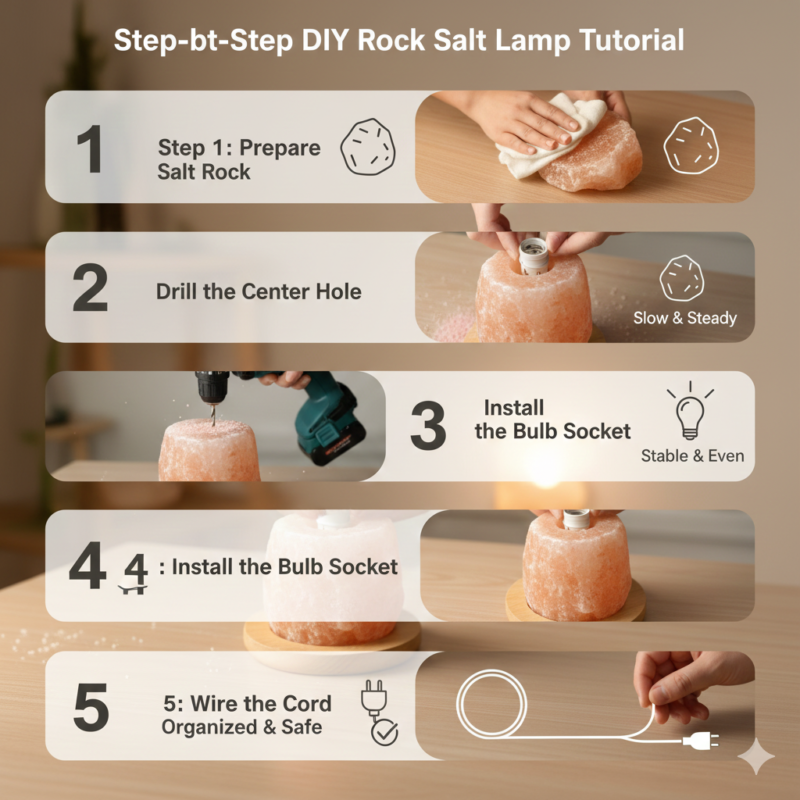
This DIY rock salt lamp tutorial shows how to make a rock salt lamp at home using simple materials and clear steps. With step-by-step pictures, you can see how rock salt chunks, a basic lamp kit, and a low-watt bulb come together into a working lamp. Many people choose a homemade salt lamp to control size, shape, and placement. This tutorial focuses on an easy, beginner-friendly approach, from preparing the rock salt to setting up the cord and bulb. By following each step carefully, you can build a functional lamp that fits naturally into your home space.
What Is a DIY Rock Salt Lamp?
A DIY rock salt lamp is a handmade lamp created by placing a bulb and socket inside natural rock salt pieces. What makes it different from store-bought lamps is the level of control you have over size, shape, and overall appearance. Ready-made lamps are often polished and uniform, while a DIY version keeps the salt closer to its raw form. Many people choose rock salt chunks because each piece looks different, with natural color lines and rough edges. This approach allows you to create a lamp that feels personal, practical, and suited to your own space rather than mass-produced decor.
Materials Needed for a Rock Salt Lamp
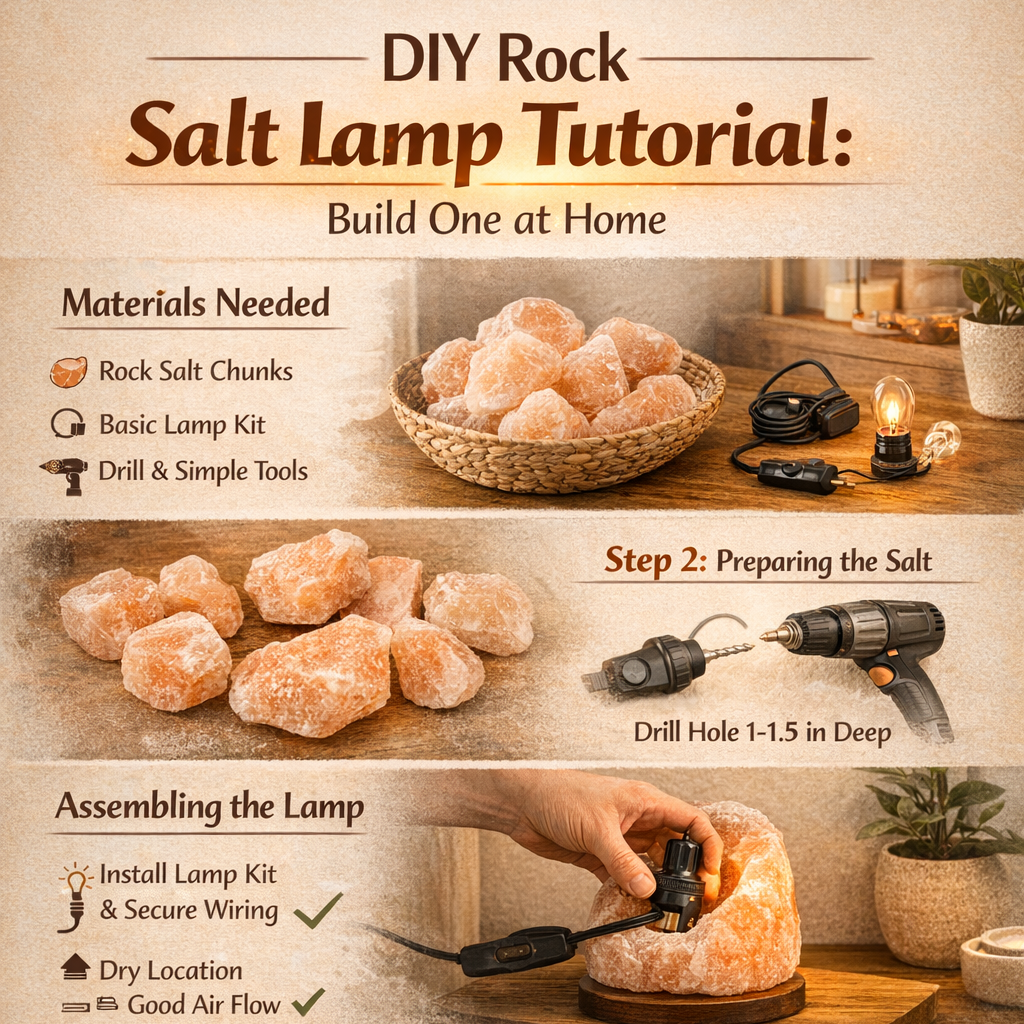
Before starting this DIY rock salt lamp tutorial, gather all materials so the process stays smooth. You will need rock salt pieces that are solid and large enough to hold a bulb. A basic lamp socket kit is required and usually includes the socket and fittings. Choose a bulb and cord designed for low wattage to keep heat levels moderate. For support, consider base options such as a wooden disc, metal plate, or sturdy tray. Having these materials ready helps keep the build simple, organized, and easier to complete from start to finish.
Tools You’ll Need Before You Start
Preparing the right tools before beginning this DIY rock salt lamp tutorial makes the process easier and safer. Most of the work can be done with basic household tools, such as a drill, screwdriver, and measuring tape. A drill with a suitable bit is important for creating space inside the rock salt for the socket. For those who want neater results, optional tools for cleaner results include a clamp to hold the salt steady and protective gloves for better grip. Having everything ready helps keep each step smooth and avoids interruptions during the build.
Step-by-Step DIY Rock Salt Lamp Tutorial
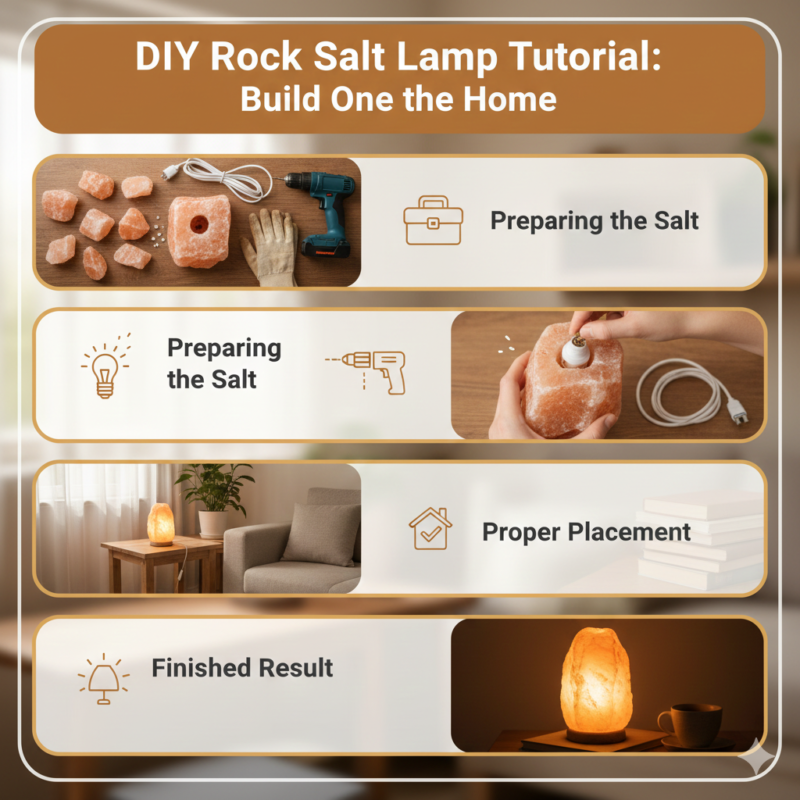
Begin by preparing the salt rock. Choose a stable rock salt piece and wipe off loose dust. When drilling the center hole, work slowly and keep the drill straight so the opening fits the socket. Next, install the bulb socket by placing it firmly into the drilled space. After that, secure the base using screws or adhesive so the lamp stays steady. Finish by wiring the cord according to the socket kit instructions. Step-by-step pictures for each stage help show hand placement, depth, and positioning, making the process easier to follow for beginners.
Safety Tips While Making a Salt Lamp
Safety should stay a priority during every step of a DIY rock salt lamp tutorial. For electrical care, always unplug the cord while working and follow the lamp socket kit instructions closely. Use only the recommended low-watt bulb to reduce risk. Heat awareness is important because bulbs can become warm during use, so avoid touching the socket right after testing. A stable setup also matters. Make sure the salt rock sits flat on its base and does not wobble. Working slowly, using steady tools, and checking each connection helps keep the process safe and comfortable from start to finish.
Testing and Setting Up Your DIY Salt Lamp
After completing the DIY rock salt lamp build, begin with the first power-on to confirm everything works correctly. Plug in the cord, switch the lamp on, and check that the bulb lights evenly without flickering. Next, focus on checking stability by gently pressing the lamp from different angles to ensure the base holds firm. If it shifts, adjust the base before regular use. For placement ideas, choose a dry, flat surface such as a side table, shelf, or desk. Proper placement helps the homemade salt lamp sit securely while providing soft, comfortable light in everyday spaces.
Common Mistakes to Avoid
When following a DIY rock salt lamp tutorial, a few common mistakes can cause problems later. Using an incorrect bulb type is one of the most frequent issues. Always choose a low-watt bulb recommended for lamp kits to avoid excess heat.Poor balance is another concern, especially if the base is not secured properly. A lamp that wobbles can be unsafe over time. Moisture exposure should also be avoided, as rock salt naturally attracts humidity. Keeping the lamp in dry areas and checking stability during setup helps prevent these issues and supports long-term, reliable use.
Conclusion
A DIY rock salt lamp is a practical project for anyone who enjoys hands-on home decor. By following clear steps, using the right materials, and paying attention to safety, it is possible to create a lamp that feels personal and functional. This tutorial shows how rock salt chunks, a basic lamp kit, and careful setup come together in a working result. Taking time with drilling, wiring, and placement helps avoid common issues later. With proper moisture control and correct bulb use, a homemade salt lamp can remain stable and usable for a long time, fitting naturally into everyday living spaces.
FAQs About DIY Rock Salt Lamps
Is a DIY rock salt lamp hard to make? Most people find it manageable with basic tools and careful steps.
What type of bulb should I use? A low-watt bulb designed for small lamps works best.
Can any rock salt piece be used? Choose solid rock salt chunks without cracks for better stability.
Do homemade salt lamps last long? Yes, with proper care and moisture control, they can last for years.
Where should a DIY salt lamp be placed? Dry areas such as living rooms, bedrooms, or offices are ideal.
Salt lamp unboxing helps new owners know exactly what to expect before using their lamp for the first time. From opening the box to checking each item inside, this process removes confusion and makes setup easier. A typical Himalayan salt lamp package includes the salt body, base, bulb, and power cord, but details can vary. This guide walks through what’s inside the box and how to set it up step by step. Whether this is your first salt lamp or a replacement, clear setup instructions help you place and use it safely at home.
What to Expect When Unboxing a Salt Lamp
When unboxing a salt lamp, the first thing you notice is the packaging, which is usually padded to protect the solid salt body during delivery. Himalayan salt lamps are naturally heavy, so weight and handling matter when lifting the lamp out of the box. It’s best to use both hands and place it on a stable surface right away. First impressions often include the natural color, texture, and shape of the salt, which can vary from lamp to lamp. Taking a moment to check for included parts helps prepare for smooth setup.
What Comes Inside the Box
During salt lamp unboxing, you’ll usually find a few standard items inside the box. The salt lamp body is the main piece and comes in a natural shape with visible texture. Most lamps include a wooden base that supports the salt securely. A bulb is often packed separately to prevent damage, along with a power cord designed for low-watt use. Some packages may also include extra fittings, such as spare screws or a bulb holder. Checking each part before setup helps ensure everything needed is ready for proper installation.
Step-by-Step Salt Lamp Setup Guide
After salt lamp unboxing, setup is usually quick and straightforward. Start by attaching the base if it is not already fixed, making sure the lamp sits evenly. Next, install the bulb by placing it into the socket inside the salt lamp body and securing it gently. When plugging in safely, choose a dry outlet and avoid pulling the cord tight. For the first power-on, switch the lamp on and allow it to warm slightly. This first use helps check that the bulb, cord, and connection are working properly.
Common Salt Lamp Accessories Explained
Several salt lamp accessories help with long-term use and simple adjustments. Replacement bulbs are the most common item, as salt lamps use low-watt bulbs that may need changing over time. Dimmer cords allow you to control brightness, which is helpful for bedrooms or evening lighting. Some people also keep spare bases, especially if the original wooden base becomes damaged or worn. While these accessories are not always required at first, having them available makes it easier to maintain your salt lamp and adjust it to different rooms or lighting preferences as needs change.
Safety Tips During and After Setup
Basic safety steps help keep a salt lamp working properly after setup. Start with stable placement by setting the lamp on a flat, sturdy surface where it won’t tip over. For electrical care, make sure the power cord is not stretched, pinched, or placed near water sources. Use only the recommended bulb and cord that come with the lamp or approved replacements. Heat awareness is also important, as salt lamps can feel warm during use. This warmth is normal, but the lamp should never be covered or placed near flammable items.
Caring for Your Salt Lamp After Unboxing
After salt lamp unboxing and setup, regular care helps keep the lamp in good condition. Moisture control is important because Himalayan salt naturally attracts humidity. Keeping the lamp switched on in dry rooms helps reduce surface moisture. For cleaning, use a dry or lightly damp cloth and wipe gently, then dry right away. Avoid rinsing the lamp or using sprays. If storing the lamp for a while, follow simple storage tips such as wrapping it in plastic and placing it in a dry area. These steps support long-term use and appearance.
Understanding Claims About Salt Lamps
Many people search for information about salt lamp claims before or after unboxing. Common topics include air quality, comfort, and overall home use. What users actually notice tends to be related to appearance and lighting rather than measurable changes in the room. The warm glow often creates a relaxed mood, which is why salt lamps are frequently used as ambient lighting. Setting clear expectations is helpful. A Himalayan salt lamp is best viewed as a decorative lighting piece that supports visual comfort, not as a device meant to alter air conditions or provide specific health outcomes.
Troubleshooting Common Setup Issues
If a salt lamp is not turning on, start by checking the power outlet, switch, and cord connection. Make sure the plug is fully inserted and the switch is in the on position. Bulb problems are also common, especially after transport. Try reseating the bulb or replacing it with the correct low-watt option. Moisture buildup can happen in humid rooms, causing the lamp to feel damp. Placing the lamp in a dry area and turning it on regularly usually helps reduce this issue. Most setup problems are simple to fix with a quick check and basic care.
Conclusion
Salt lamp unboxing and setup does not need to feel confusing or complicated. Knowing what comes inside the box, how to assemble each part, and how to care for the lamp makes the process smooth from the start. Himalayan salt lamps work best when placed thoughtfully, kept dry, and used with the correct bulb and cord. When expectations focus on lighting and home ambience, these lamps fit easily into daily spaces. With simple setup steps and basic care, a salt lamp can remain a steady part of your home decor, offering warm light and visual comfort over time.
FAQs About Salt Lamp Unboxing and Setup
Does every salt lamp come fully assembled? Most lamps need light setup, such as placing the bulb and checking the base.
Is the bulb always included in the box? Many packages include a bulb, but it’s good to check during unboxing.
Can I use a different bulb if it burns out? Yes, as long as it matches the recommended low wattage.
Where should I plug in a salt lamp? Choose a dry outlet away from sinks or open windows.
Is it normal for the lamp to feel warm? Yes, gentle warmth during use is normal and expected.